
Hanuman Sak Yant Merman - Running - Sitting Thai Tattoo
Son of Hanuman Thai Merman Mutchanu Yant
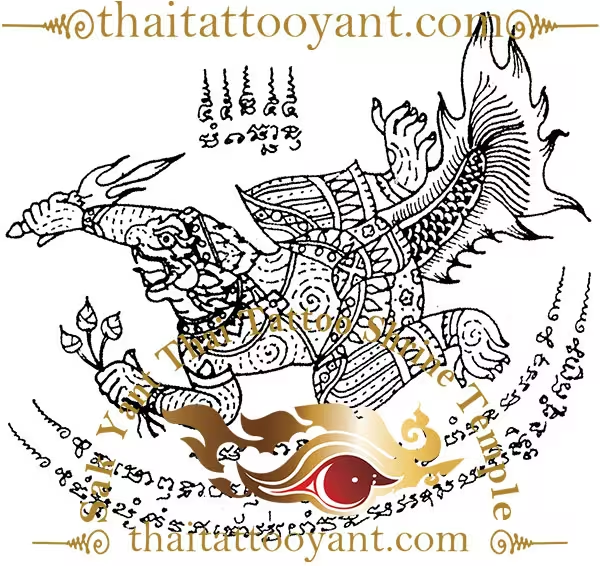
The Mutchanu Yant (also spelled Machanu or Majchanu) depicts the son of Hanuman and the mermaid princess Suvannamaccha. This unique creature—half-monkey, half-Merman—serves as a powerful Sak Yant for adaptability, protection, and overcoming impossible odds.
Meaning and Spiritual Power
As a hybrid of two legendary figures, the Mutchanu Yant is believed to grant the wearer the best traits of both parents:
Amphibious Adaptability: Just as Mutchanu can move freely on land and in water, this Yant is believed to help the wearer navigate different environments and social circles with ease.
Supernatural Strength: He inherits the immense power and invincibility of his father, Hanuman.
Agility & Evasion: The Merman or mermaid lineage adds a level of speed and “Klaew Klaad” (evasive protection), helping the wearer “swim” through danger and avoid obstacles.
Loyalty & Resolution: It represents the reconciliation of conflicting duties, as Mutchanu famously had to choose between his foster father and his biological father, Hanuman.
Son Of Hanuman Sak Yant Merman Machanu or Mucha Nu
This image also depicts Macchanu (มัจฉานุ, also spelled Machanu or Mucha Nu in Thai: มัจฉานุ), the half-monkey, half-Merman son of Hanuman from the Thai Ramakien and Ramayana .
It is another traditional Thai-style line drawing, very common in temple art, murals, amulets, and especially Sak Yant (sacred Thai tattoos). The figure shows:
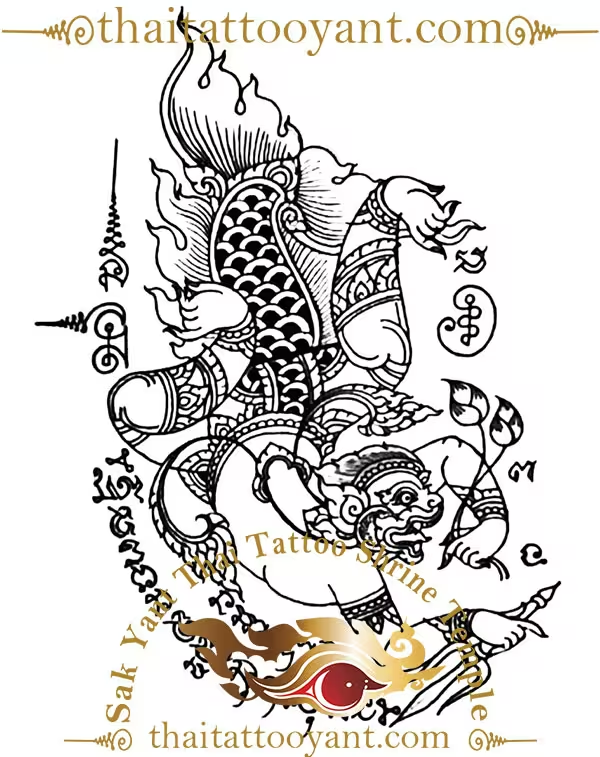
Upper body: Monkey/warrior (vanara) form with ornate armor, headdress, fierce expression, and dynamic pose.
Lower body: Mermaid or Merman like tail, often flowing.
Surrounding elements: Traditional Thai Kata script, decorative motifs, and flames or auras symbolizing power.
Key Differences from the First Image
The first image showed a more Swimming pose. This one has a more dynamic, coiled, or swimming/fighting stance, which is common in artistic variations of the same character. These drawings emphasize his hybrid nature and aquatic agility.
Story and Symbolism (Recap with Context)
Macchanu is born from the union of Hanuman (the monkey god) and Suvannamaccha (สุพรรณมัจฉา), the golden mermaid princess and daughter of the demon king Thotsakan (Ravana).
He grows up in the underwater realm (often under the guardianship of the demon king Maiyarap).
In the epic, he initially fights Hanuman (unaware he is his father) while guarding an underwater passage.
After their father-son bond is revealed, he joins the righteous side.
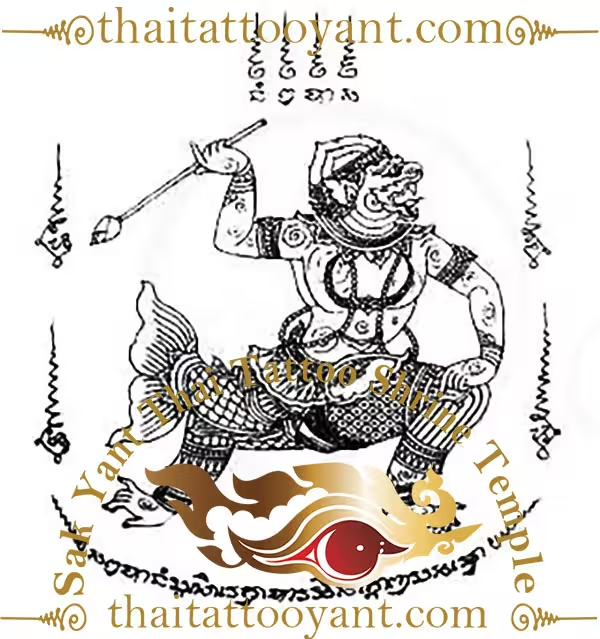
Weapons:
Sword raised in one hand for combat.
Other hand holding a lotus flower with ribbons (symbol of offering, purity, and auspicious victory).
Merman strength: Combines monkey agility, strength, and cleverness with aquatic abilities and adaptability in water/land realms.
Warrior spirit: The sword shows readiness to fight enemies and overcome obstacles. In Sak Yant and protective art, this design grants invincibility, courage, protection from danger, and success in battles (physical or metaphorical).
Loyalty and balance: Represents reconciliation, family bonds, and the ability to thrive in different environments.
The Story Behind the Yant
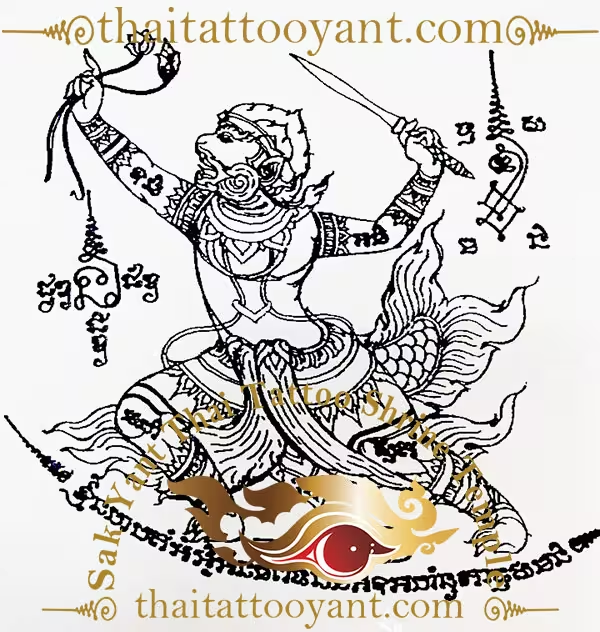
In the Thai Ramakien, Hanuman was building a bridge to Lanka. The mermaid Suvannamaccha, daughter of the villain Ravana, was ordered to steal the rocks to stop him. Hanuman caught her, they fell in love, and she eventually gave birth to Mutchanu.
Later, father and son met on the battlefield. Mutchanu, having the white body of a monkey but a fish’s tail, was so powerful that even Hanuman was surprised by his strength before realizing he was fighting his own son.
Hanuman and Golden Mermaid Princess Sak Yant
This image depicts Hanuman and Suvannamaccha (สุพรรณมัจฉา), the golden mermaid princess — a famous romantic scene from the Ramakien.
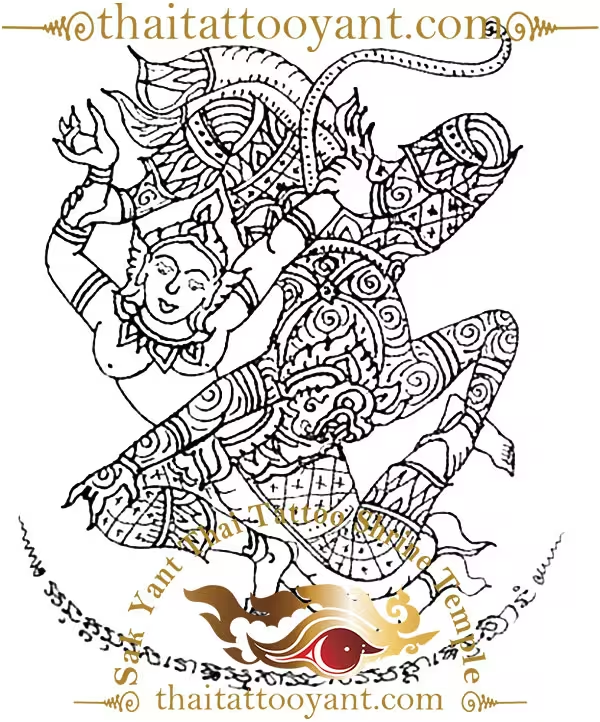
Key Features
Hanuman: The monkey warrior on the lower/right side with fierce face, ornate armor, and long tail.
Suvannamaccha: The beautiful female figure (upper/left) with a divine/human-like face, bare upper body, and fish/mermaid tail.
Pose: Dynamic, intertwined, almost dancing or embracing pose with flowing movement, ribbons, and tails swirling — giving a sense of motion (which is why it can be mistaken for “flying”).
Surrounded by Thai Kata Khom sacred script at the bottom.
Story & Meaning
In the Ramakien (Thai Ramayana), while Hanuman and the monkey army are building the bridge to Lanka, underwater mermaids try to sabotage it. Hanuman meets Suvannamaccha, the beautiful daughter of the demon king Thotsakan (Ravana). Instead of fighting, they fall in love. Their union results in the birth of Macchanu (the half-monkey, half-fish son you saw in earlier images).
Symbolism:
Love, union, and reconciliation — Represents harmony between opposing sides (monkey warrior vs. demon realm).
Hybrid power & adaptability — The union of land/air (Hanuman) and water (Suvannamaccha) creates powerful offspring and alliances.
Romance and fertility — In Sak Yant and art, this design is sometimes used for attraction, relationships, or blessings in love and family.
Dynamic energy — The flowing, swirling pose conveys movement, passion, and life force.
This is a narrative/romantic variation rather than a pure warrior or flying Hanuman. It is much rarer than the battle or flying poses in your collection and nicely connects to the Macchanu images you shared at the beginning.
Thai Tattoo Hanuman Running
In the tradition of Sak Yant, particularly the Hanuman Running (often referred to as Hanuman Haun or Hanuman Phlaeng Rit) shifts the focus from “static authority” to Dynamic Action and Swift Success. A very popular representation in Thai art, temple murals, and especially Sak Yant (sacred Thai tattoos).
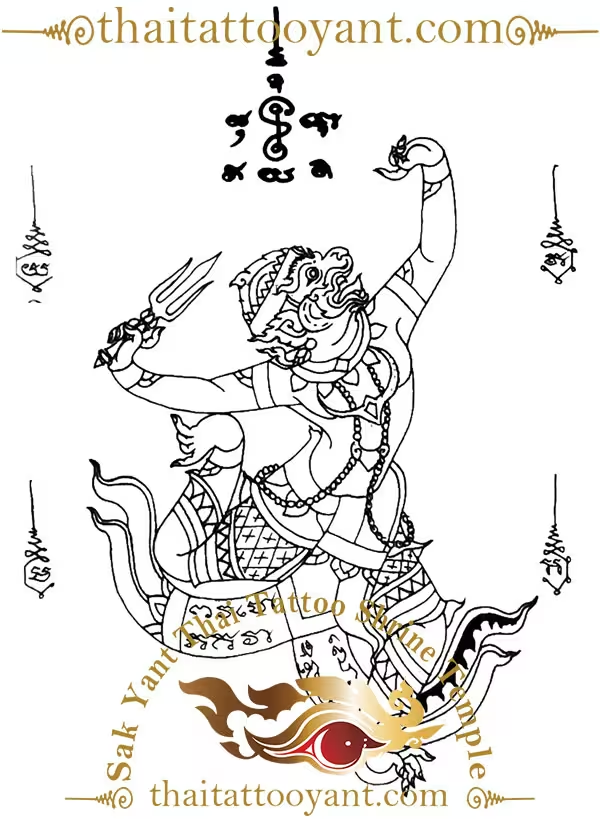
While the previous images showed Hanuman “Riding” a steed (controlling a force), the “Running” or “Leaping” Hanuman represents Hanuman himself as the primary force of nature.
Meaning of the Pose: Speed and Agility
This is an “active” Yant. It is designed for individuals who need to move fast and stay ahead of their competition.
Rapid Advancement: It symbolizes a “fast track” to success. It is believed to help the wearer bypass the usual slow grind of a career or project.
Klaew Klaad (Evasion): The running posture represents the ability to “run away” from danger, accidents, or bad luck. In a spiritual sense, it means the wearer is “too fast to be caught” by enemies or misfortune.
Energy and Vitality: This Yant is meant to provide a boost in physical and mental stamina, helping the wearer handle a heavy workload without burnout.
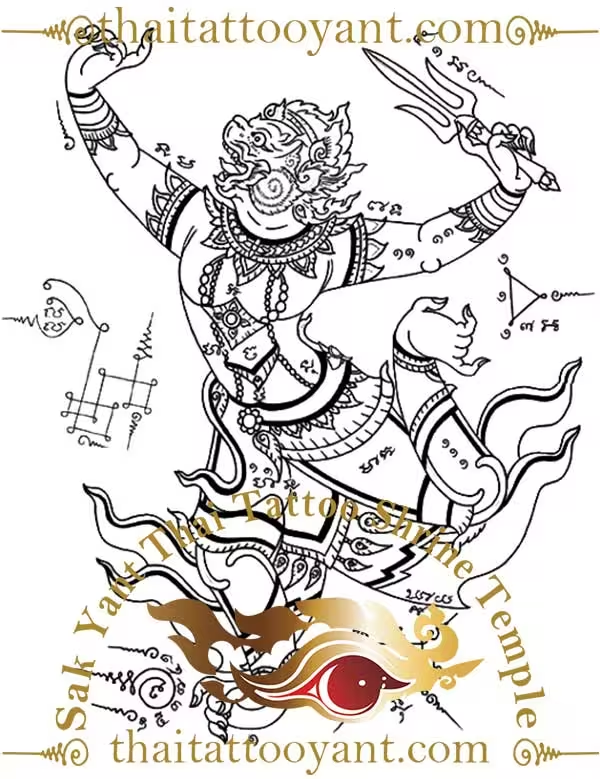
The Weaponry: The Trident (Tri)
Hanuman is holding a Trident (Tri), which is the weapon of Lord Shiva.
Divine Protection: As Hanuman is an avatar of Shiva, the Trident represents ultimate protection against both physical and spiritual harm.
Control of the Three Worlds: The three prongs represent power over the earth, the atmosphere, and the heavens. It signifies that the wearer’s influence and protection are “universal.”
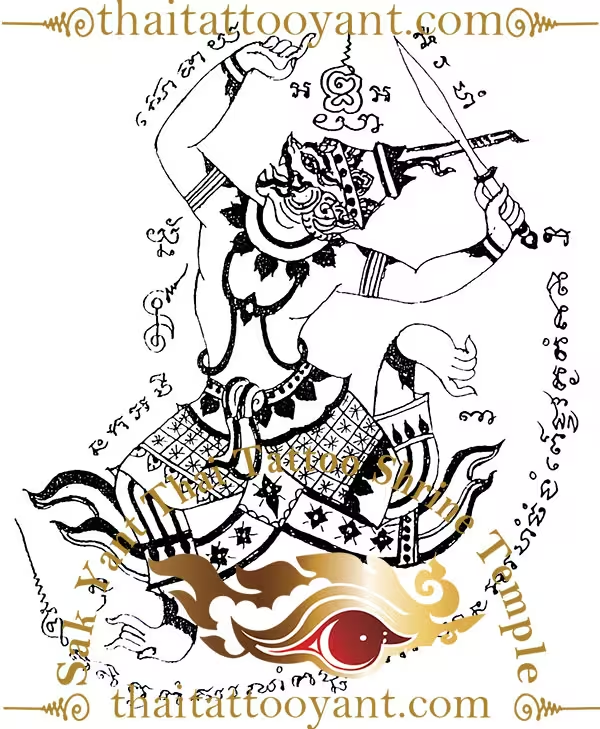
“Hanuman Holding Sword” (หนุมานถือดาบ) He wields a sword (one of his common weapons in Thai Ramakien depictions, alongside the trident or mace).
Monkey god appearance: Classic vanara face with fierce expression, ornate traditional Thai hmer armor, headdress, jewelry, and flowing tails.
The Messenger Aspect
In the Ramayana, Hanuman was the scout and messenger for Phra Ram.
Effective Communication: The running pose emphasizes his role as the messenger who could cross the ocean in a single leap. This makes the Yant popular for people in sales, logistics, or diplomacy, where clear and fast communication is the key to winning.
Overcoming Great Distances: It represents the power to achieve goals that seem “too far away” or out of reach.
Summary of Meaning
The Running Hanuman is the “Action” Yant. It is less about “sitting on a throne” and more about “winning the race.” It provides the wearer with the agility to see an opportunity, the speed to grab it before anyone else, and the protection (via the Trident) to keep it.
In the Thai Kata script surrounding these images, there is often a hidden emphasis on Metta (Kindness), ensuring that your “run” to the top doesn’t step on others, which helps maintain long-term success.
Hanuman Thue Khwan Sak Yant
In the Sak Yant tradition, Hanuman wielding an Axe (Hanuman Thue Khwan) represents the “Breaker of Obstacles.” While the flag represents victory and the trident represents divine protection, the axe is a tool of decisive, forceful action.
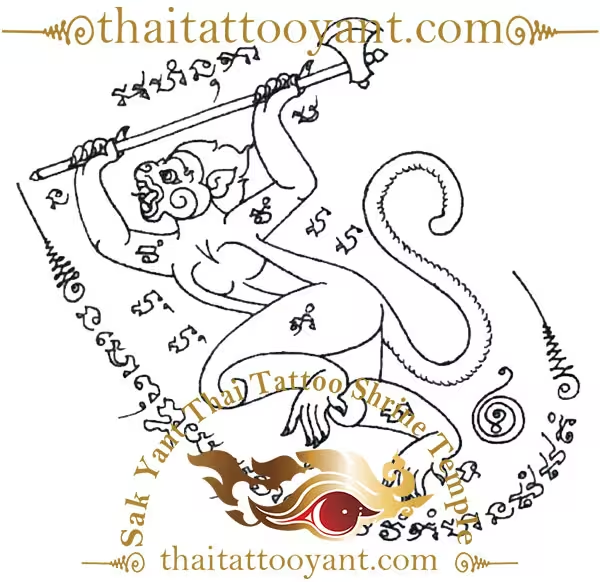
Decisive Victory (Tad Satroo)
The axe is not a weapon of defense; it is a weapon of offense and precision.
Cutting Through Problems: It symbolizes the power to “cut through” complex issues, red tape, or long-standing disputes. If you are stuck in a situation that feels like a tangled knot, the Axe Hanuman is meant to provide the clarity and force to resolve it instantly.
Ending Rivalries: It represents a “sharp” end to opposition. It is believed to help the wearer definitively defeat enemies so they cannot return to cause more trouble.
The Power of Destruction and Renewal
In spiritual terms, the axe is used to chop down “the old” to make room for “the new.”
Eliminating Bad Karma: Some practitioners believe this Yant helps “cut” the ties of bad luck or negative spiritual influences (vows, curses, or old patterns) that are holding the person back.
Aggressive Protection: Unlike a shield, the axe protects by neutralising the threat before it can reach the wearer.
Running Hanuman Chern Thong with Flag
“Running Hanuman Carrying Flag”) — one of the most popular and powerful Hanuman designs in Thai Sak Yant tattoos.
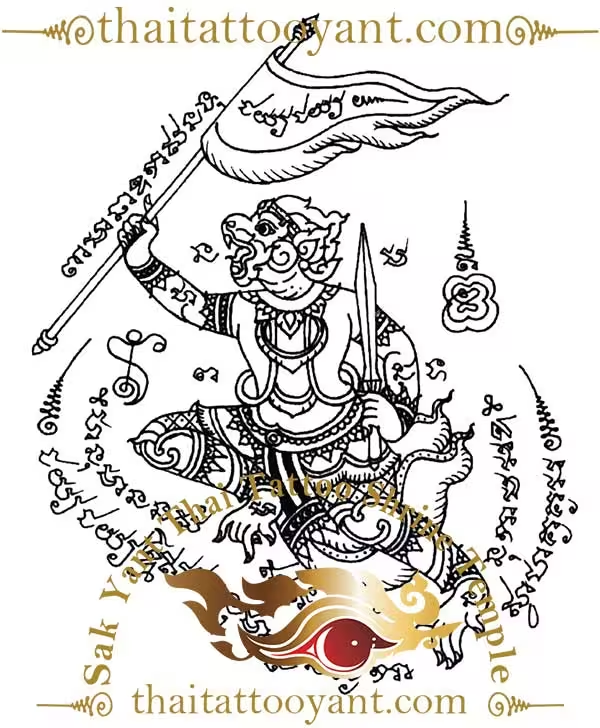
Key Features
Hanuman in a dynamic running / charging warrior pose.
Holding a victory flag (ธง) high in one hand.
Often holding a sword or weapon in the other (as seen here).
Ornate traditional armor, headdress, and flowing tail.
Surrounded by protective Thai Kata sacred script.
In the Ramakien (Thai Ramayana), Hanuman is the ultimate loyal warrior. This specific variation, Yant Phra Hanuman Chern Thong (ยันต์พระหนุมานเชิญธง), symbolizes
Phra Hanuman Sak Yant Thai Tattoo Running
The image shows a highly intricate version of Hanuman Phlaeng Rit (Hanuman Manifesting Powers), often referred to as the Leaping or Running Hanuman shows him in a state of Total Combat Readiness.
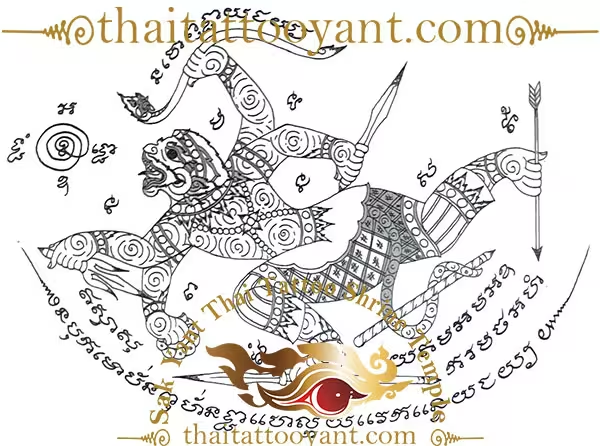
Weapons Visible in This Depiction
This is a battle-ready “Running Hanuman” (or “Hanuman Out to War”) variation, heavily armed:
Bow (ธนู): Held in his left hand (or upper hand), drawn and ready. Emphasizes precision, long-range attack, and focus.
Arrow / Spear: In his right hand, a long pointed weapon (could be interpreted as a spear or arrow being thrust).
Additional Arrows: One large vertical arrow with fletching on the right side of the image, and another horizontal spear/arrow at the bottom.
Sword or Dagger: Visible near his body/waist area (partially integrated with the armor and motion).
Tail as Weapon: His long, flowing tail ends in a sharp, pointed or flame-like tip, often used symbolically as a whip or striking weapon in Ramakien stories (especially when it was set on fire).
style in Sak Yant art).
Thai Hanuman Nang Sak Yant
The Hanuman Sitting (or Hanuman Nang) represents a very different energy compared to the “Running” or “Riding” versions. While those focus on speed and conquest, the sitting pose—especially in this “curled” or “meditative” circular form—focusesed on
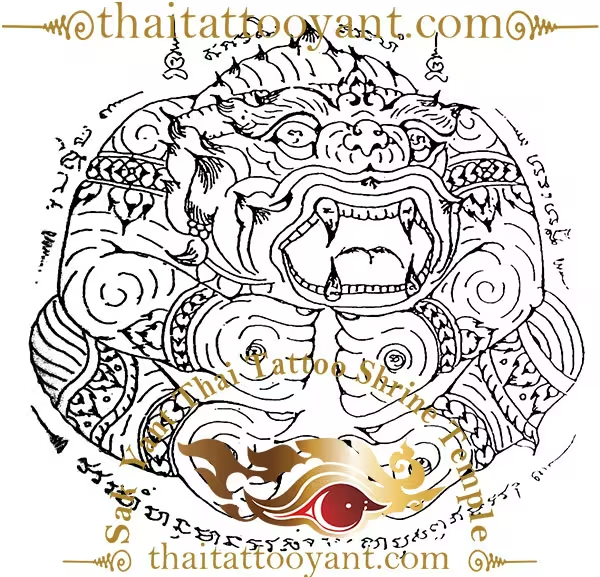
Invincibility, Concentration, and Internal Power.
The “Knot of Power” (Hanuman Klom)
Hanuman is depicted in a circular, compact posture. This is often called Hanuman Sakot Tap (Hanuman Subduing the Army) or Hanuman Nang Pen (Hanuman Sitting in Life).
Immovability: This Yant is meant to make the wearer “unshakable.” Just as a mountain cannot be moved, the wearer is believed to be protected from being fired, being moved from their position of power, or being swayed by the opinions of others.
Kong Grapan Chadtri (Invulnerability): The way he is tucked into a ball represents a “shield.” It is traditionally believed to protect the physical body from sharp objects and accidents by “closing” the person’s energy to outside harm.
Maha-Ut (Silencing): The “closed” nature of this pose is also used to “silence” enemies. It is meant to stop people from speaking ill of you or to prevent legal troubles from progressing.
The Four Arms in the Sitting Pose
you can see his four hands arranged at the bottom.
Holding the Foundation: Instead of wielding weapons to attack, his hands are often positioned to hold his own feet or the ground. This represents Self-Mastery. You are in total control of your own emotions and your own destiny.
The “Whirlpool” Swirls: Notice the spiral patterns on his knees and shoulders. These represent the “wind” energy kept in reserve. It suggests that while you are sitting still and appearing calm, you have the power of a hurricane stored inside, ready to be released if necessary.
The Mon Raman Thai Kata Script
The script at the bottom of Picture is the Mon Raman variation of the “Kata” (Mantra). In this specific “Sitting” context, the mantra is usually for “Metta Karuna” (Compassion) and “Amnat” (Quiet Authority). It is the power of a leader who doesn’t need to shout to be obeyed—their mere presence (the “sitting” weight) is enough.
Summary
The Sitting Hanuman is the ultimate “Defender” Yant. It is less about “winning the race” and more about “owning the ground you stand on.” Best suited for:
Those in high-pressure jobs who want to stay “calm under fire.”
People seeking protection from accidents or physical harm.
Anyone who has reached a high position and wants to protect themselves from being “toppled” by rivals.
Hanuman Panom Mue Thai Tattoo
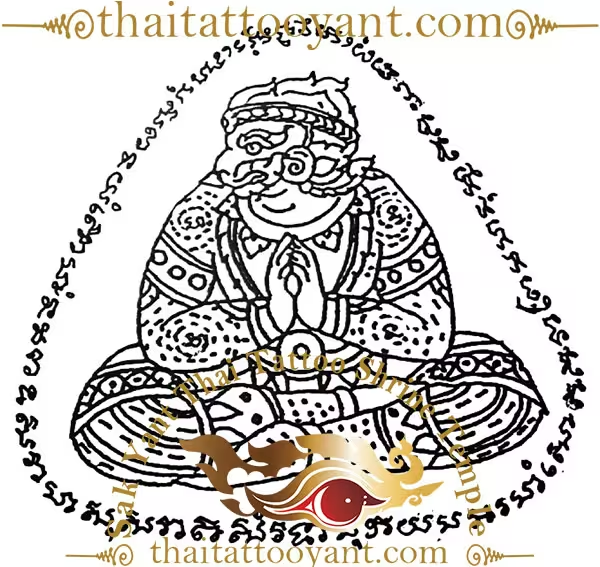
The Hanuman Sitting and Praying (Hanuman Panom Mue) is a beautiful and distinct shift in energy from the warrior archetypes you’ve shared. This is Hanuman in his role as the Devotee rather than the General.
In the Mon Raman tradition, this Yant is less about “fighting” and more about Blessings, Charm, and Sacred Protection.
The Power of “Wai” (The Prayer Gesture)
When Hanuman is shown with his hands pressed together (Anjali Mudra or Wai), it symbolizes submission to higher virtue.
Metta Maha Niyom (Great Compassion): This is the primary power of this Yant. It is designed to make the wearer “lovable” and “mercy-inspiring” to others. It is believed that even enemies who see you will find their anger softening.
Humility brings Rank: In the Ramakien, it was Hanuman’s devotion that earned him his high rank and celestial rewards. This Yant suggests that through politeness, diplomacy, and virtue, the wearer will be promoted and rewarded by their superiors.
The “Shield of Prayer”
While it looks peaceful, this is still a protection Yant.
Santi-Sukh (Peaceful Happiness): It acts as a spiritual “calm” that protects the home or the person from chaotic energy, arguments, and household discord.
Invulnerability through Virtue: There is a belief in Thai magic that “the humble person cannot be killed.” By showing Hanuman in prayer, the Yant offers a protective aura that wards off “evil spirits” and “black magic” by maintaining a high spiritual vibration.
Sak Yant Hanuman on a platform/throne
This is a seated / enthroned Hanuman (หนุมานนั่ง), a powerful and stable variation in Thai Sak Yant, amulets, and traditional Ramakien art.
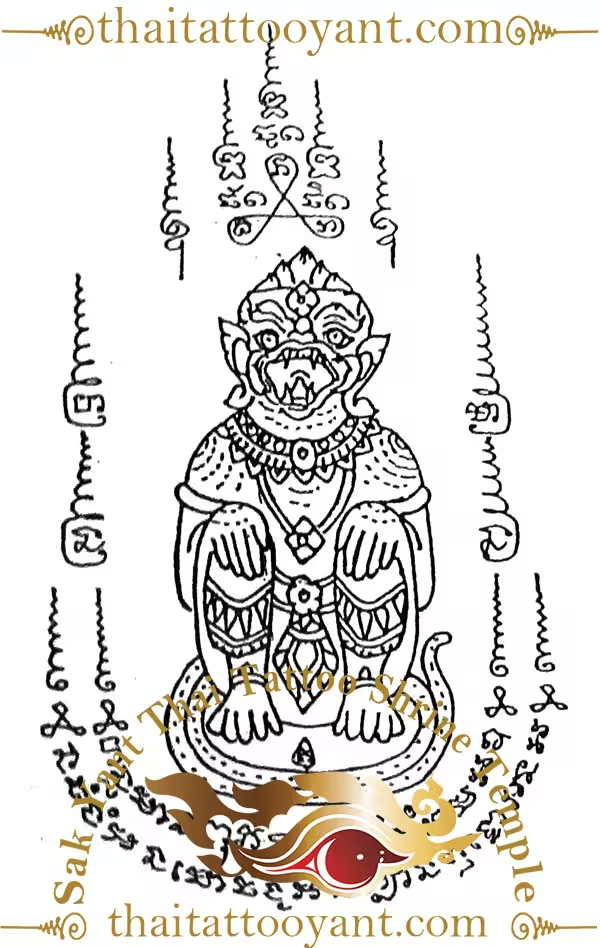
In the Sak Yant tradition, an open mouth is never just a yawn; it is a Command.
Maha Amnat (Great Authority): The open mouth symbolizes the “Roar of the General.” It is meant to instill fear in enemies and respect in subordinates. It is believed that the wearer’s words will carry more power—people will listen and obey when you speak.
Consuming Negativity: Some masters teach that the open mouth represents Hanuman “swallowing” the obstacles, bad luck, or black magic sent by others, preventing them from reaching the wearer.
Blowing Out Grace: Conversely, it represents Hanuman breathing out Barami (spiritual merit) and protection over the wearer’s surroundings.
Hands on Knees (The Commander’s Seat)
The “hands on knees” posture is a position of Alert Readiness.
The “Waiting” Warrior: Unlike the curled-up “circular” Hanuman, this version is sitting upright. He is calm but ready to spring into action at a second’s notice. It symbolizes a leader who is in total control of his environment.
Stability: This posture is intended to provide the wearer with a “heavy” presence. It is for someone who needs to stay grounded in their position (at work or in life) and cannot be easily pushed aside.
The “Tiger-like” Features
In this specific drawing Hanuman’s face takes on very fierce, almost feline characteristics.
The Fangs: The prominent fangs represent Kong Grapan (Invulnerability). Meant to act as a deterrent to anyone thinking of causing physical or professional harm.
Hanuman Sitting with a Woman Kieo Nang Chom Nang
The Hanuman Sitting with a Woman (often referred to as Hanuman Kieo Nang or Hanuman Chom Nang) is a specialized Yant that moves away from the “warrior” and “protection” themes and into the realm of Metta Maha Saneh (Extraordinary Attraction and Charm).
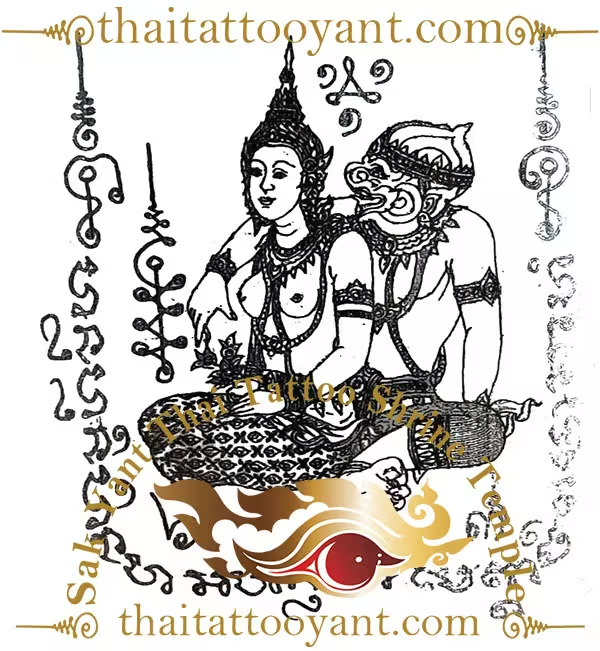
In this specific Mon Raman depiction, the woman is typically Nang Suvannamaccha (the Golden Mermaid Princess) or a celestial maiden. This Yant captures Hanuman’s legendary status as a “great lover” and a “charmer” who could win the hearts of even his enemies’ daughters.
Social Popularity: It is believed to help the wearer be loved by everyone they meet—bosses, colleagues, and potential romantic partners.
Negotiation Power: In business, it represents “soft power.” Instead of forcing someone to agree with you (like the Lion or Elephant Yant), this Yant makes people want to agree with you because they like you.
Success in Romance & Relationships
Because Hanuman is seen embracing a beautiful figure, this is a classic “Love Yant.”
Finding a Partner: It is traditionally used by those seeking to find a spouse or to make themselves more noticeable to someone they admire.
Harmonizing Conflict: It is also used to “cool down” arguments between couples, bringing back the “sweetness” and affection in a relationship.
The “Victor in Love”
Hanuman was not just a soldier; he was a character who succeeded in every domain.
Winning the Impossible: In the Ramayana, his romance with Suvannamaccha (the mermaid) turned an enemy into an ally. This Yant symbolizes the ability to turn a difficult or hostile situation into a loving, beneficial one.
Confidence: It provides the wearer with “sexual confidence” and a magnetic aura.
Summary
The Hanuman Sitting with a Woman is the ultimate “Charisma Yant.” It represents the balance of strength and sweetness—showing that the strongest warrior is also the one who can be most tender and loved.
Hanuman Phaen Din Wai Sak Yant
Hanuman Phaen Din Wai (Hanuman Shaking the Earth) or Hanuman Plang Rit (Hanuman Manifesting Supernatural Power). This Yant depicts the monkey general in a state of high spiritual activation, typically intended to provide the wearer with limitless energy and dominance over their environment.
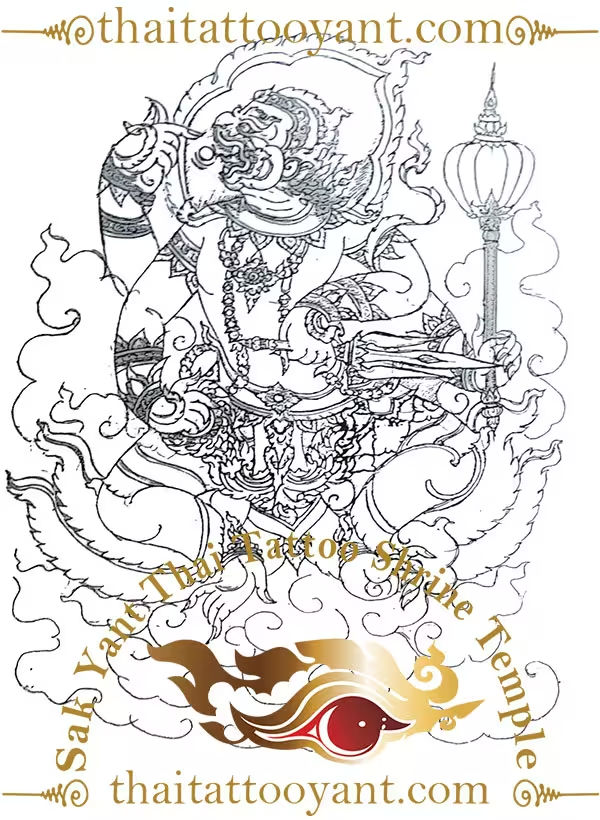
Key Iconography
The Mace (Gada): Hanuman holds his signature weapon, representing blunt force and crushing power. It is the ultimate tool for “leveling” a playing field and defeating much larger opponents.
The Short Blade (Krit/Dagger): In his other hand, he wields a dagger, which signifies precision and hidden protection. This suggests a person who can handle both broad challenges (the mace) and specific, delicate threats (the dagger).
The Clouds/Smoke: Hanuman is shown emerging from or surrounded by celestial clouds, which emphasizes his immortal, god-like status and his ability to move between the earthly and heavenly realms.
This Yant is designed for someone who needs to be “larger than life.” It provides the spiritual weight to command a room, the physical energy to never tire, and the protection of celestial weapons to ensure that no obstacle can remain standing.
In the iconography of the Mon Raman lineage and Thai Sak Yant, Hanuman is frequently depicted with a trident (Tri) for several reasons:
Symbol of Divine Lineage
Hanuman is considered an avatar or a spiritual “son” of Lord Shiva. Since the trident is Shiva’s primary weapon, Hanuman wielding it signifies:
Supreme Protection: It represents the highest form of spiritual defense against both physical enemies and malevolent spirits.
Phra Hanuman Sak Yant Thai Tattoo
A classic circular Sak Yant of Hanuman (Phra Hanuman) in a powerful, commanding seated or semi-seated warrior pose, richly adorned with traditional regalia.
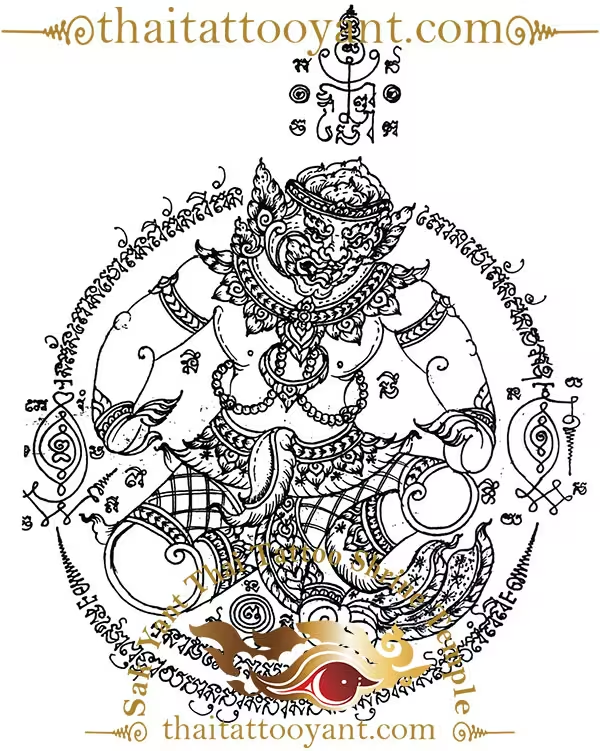
Key Elements
Hanuman: The monkey god depicted with a fierce yet majestic expression, wearing an ornate headdress, multiple necklaces/chains, armbands, and patterned lower garments. He is in a strong, stable pose (legs positioned powerfully), radiating authority and readiness.
Circular Frame: Symbolizes complete, all-encompassing protection from all directions.
Surrounding and Top Script: Thai Kata script The mantras at the top and around the border are sacred invocations calling upon Hanuman’s power.
Core Meaning and Powers
This yantra channels Hanuman’s divine qualities for:
Strength, courage, and invincibility (Kong Grapan) — Physical and spiritual resilience; protection against weapons, danger, accidents, and harm.
Victory and success (Chana Satru) — Overcoming enemies, obstacles, competitors, or difficult situations in life/work.
Authority, leadership, and charisma (Maha Amnaj + Metta) — Commanding respect, influence over others, and a strong personal presence.
Loyalty, perseverance, and stability — Hanuman’s legendary devotion and endurance; this version’s more grounded pose emphasizes long-term strength and steadfastness.
Overall protection — Warding off evil, black magic, negative energies, and misfortune.
Social Media Links
Bangkok Ink Tattoo Group Associates in Business
Sak Yant Tattoo Designs
Sak Yant Designs
Thai Tattoo Designs
Thai Tattoo Yant Designs
Tiger Web Geek, Website Design, Hosting, SEO, Marketing
Thai Tattoo Sak Yant UK Tours
Bangkok Ink Studio, Machine, Hand Poke Tattoos, Tattoo Removal, VIP Service to Ajarn Ohr
Tattoo School Thailand Bangkok
Asian Artifacts oneshopasia.com
Thai Tattoo Sak Yant USA
...
Skindiver Tattoo Studio, Gothenburg, Sweden
inktattoo.se Tattoo Studio
Skin Graffiti Tattoo Studio UK
Happysailortattoo.com Old School Tattooing
Ink Tattoo Studio
jourservice
The Tattooed Gent Studio