
Hanuman Sak Yant Dancing
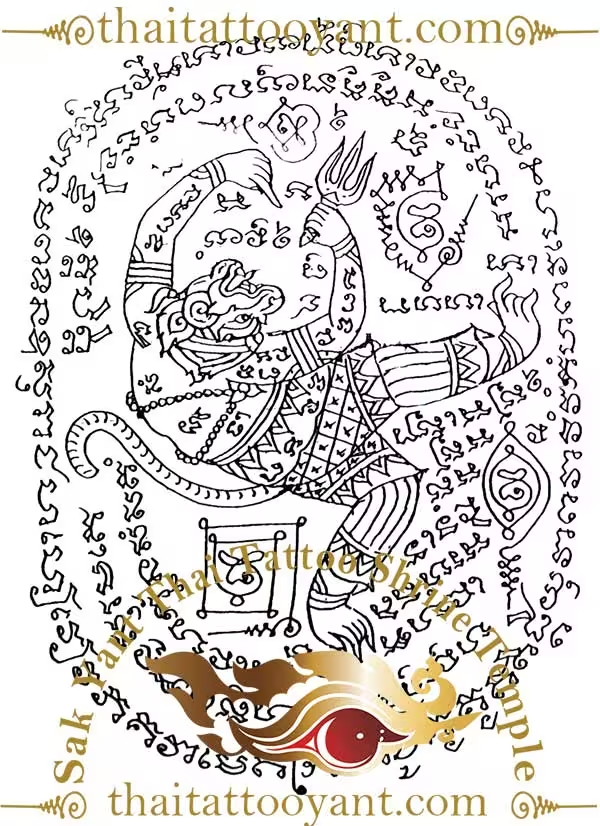
This image depicts a dynamic and powerful variation of the Hanuman Sak Yant (ยันต์หนุมาน), specifically one of the warrior poses from the traditional series of Hanuman yants.
Visual Breakdown and Symbolism
Hanuman’s pose: The monkey god is shown in a fierce, battle-ready stance — one arm is raised high (often interpreted as a gesture of triumph, command, or invoking power), while the other hand holds a trident (ตรีศูล or Trishula). The trident is a sacred weapon associated with divine force, the three realms (heaven, earth and the underworld), and the ability to pierce through negativity, illusions, and enemies.
Attire and details: Hanuman wears ornate armour, necklaces, and a crown-like headdress, emphasising his divine and royal status as the invincible warrior from the Ramakien (Thai Ramayana). His tail and dynamic posture convey agility, speed, and unstoppable momentum.
Yant Hanuman See Korn (ยันต์หนุมานสี่กร) or Yant Hanuman Plaeng Rit (ยันต์หนุมานแผลงฤทธิ์),
Four-Armed Hanuman Manifesting Miraculous Powers.” It depicts the legendary monkey general from the Ramakien transforming into his battle-ready, superpowered state to wield multiple weapons simultaneously.
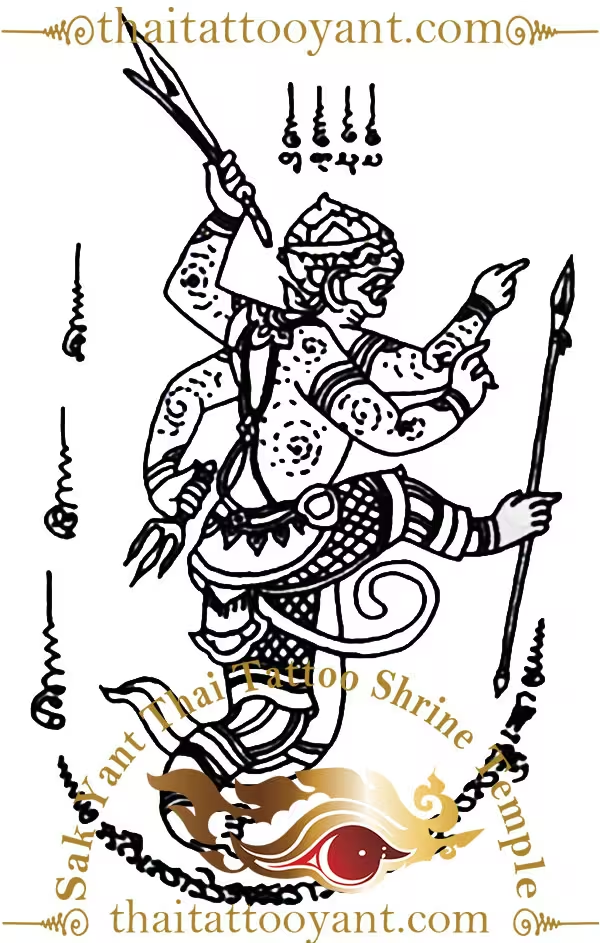
Top Left Arm: Holds a short tactical blade or dagger raised aloft, symbolizing the ability to slice through obstacles and cut down threats.
Bottom Left Arm: Grips a triple-pronged trident (Trishula or Sam-Ngam), a weapon of divine authority and crushing power.
Top Right Arm: Points an index finger forward/upward, which in traditional Thai iconography represents commanding authority (Maha Amnaj) or casting a spell to stun or disorient adversaries.
Bottom Right Arm: Points a fore finger to the futer of your life.
The Right Foot: Holds a long spear or lance (Hok), symbolizing long-range precision and breaking through lines of defense.
The Textual Border: Sweeping beneath his leaping stance is a curved array of Thai Khom characters containing specific Kata (mantras) to activate his warrior spirit. Above his crown (Chada), four distinct Unalome spirals broadcast his focus and alignment with higher righteousness.
Surrounding elements
Ancient Kata script (Thai style) and mantras, these are sacred incantations that “activate” the yant’s power.
The overall composition is energetic and directional, symbolizing forward movement in life challenges.
This design featuring the multi-armed monkey warrior Yant Hanuman See Korn (ยันต์หนุมานสี่กร) or Yant Hanuman Plaeng Rit (ยันต์หนุมานแผลงฤทธิ์), which translates to “Four-Armed Hanuman Manifesting Miraculous Powers.” It depicts the legendary monkey general from the Ramakien transforming into his battle-ready, superpowered state to wield multiple weapons simultaneously.
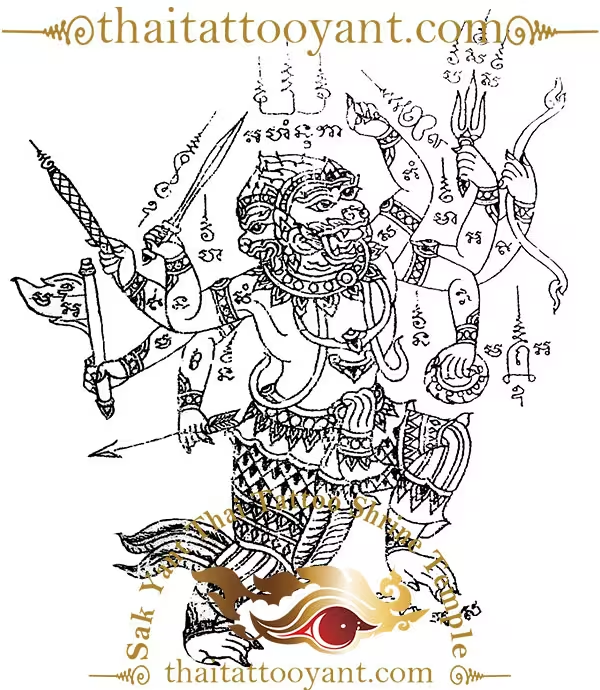
Core Meaning and Benefits
In Thai Sak Yant tradition, this Hanuman yant embodies the monkey god’s legendary qualities as the ultimate loyal warrior, leader of the monkey army, and devotee of Lord Rama. Key blessings include:
Strength, Courage, and Invincibility — Hanuman grants physical and mental resilience, fearlessness in the face of adversity, and the power to overcome obstacles or enemies. Wearers often feel boosted confidence and the ability to “win” in difficult situations (battles, competitions or in life’s struggles).
Protection and Victory — Strong safeguarding against danger, harm, black magic, evil spirits, and misfortune. The trident specifically amplifies protection across the three realms and helps “defeat” negativity or rivals. It is believed to bring success and triumph (“always victorious”).
Loyalty, Leadership, and Perseverance — Encourages unwavering devotion (to principles, goals, or loved ones), quick-witted intelligence, agility in decision-making, and the endurance to keep fighting the “good fight.”
Overall Power and Charisma — Many versions with weapons such as the trident also enhance authority, influence over others, and the ability to lead or command respect. It can also deflect bad karma and provide a shield of divine energy.
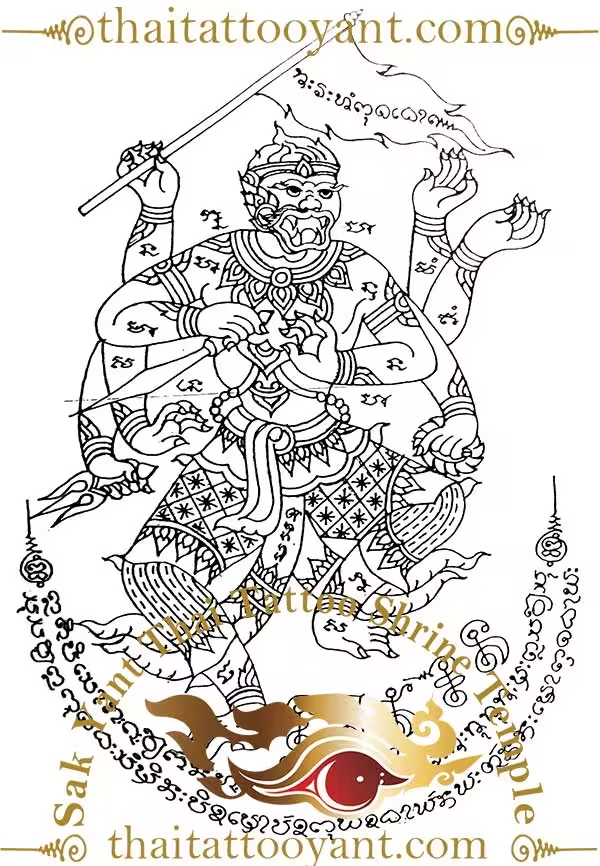
This design leans toward raw warrior energy and battlefield victory with Flag compared to the gentler Hanuman poses like the prayer-hands one, which focuses on spiritual protection via the Triple Gem). This is especially popular among people such as fighters (e.g., Muay Thai fighters), soldiers, leaders, or anyone facing high-stakes challenges who need unbreakable strength and protection.
Below
The Geometric Textual Cage: The entire figure is typically framed by a circular or radiating arc, but this one is square in Thai Kata script syllables. These function as a spiritual containment field, locking his volatile, explosive cosmic energy securely within the wearer’s personal aura.
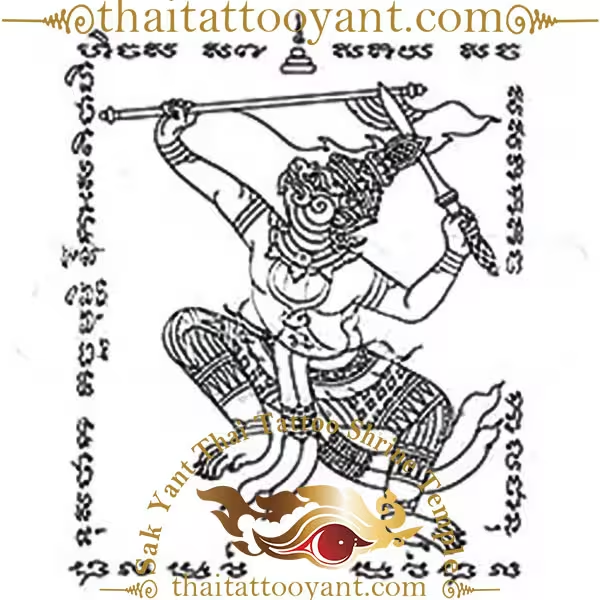
Cultural and Spiritual Context
Hanuman, the white monkey god with supernatural powers (including flight and near-immortality), represents the ideal of a humble yet unstoppable hero who rises above limitations through loyalty and bravery. The yant’s full potency comes from:
Sacred geometry and Thai Kata mantras and the Ajarn (master’s) blessing ritual with a specific Kata incantation.
The wearer’s respectful conduct often following precepts to avoid “breaking” the Yant’s sacred power.
Below
Yant Hanuman Rairam
This is a dynamic Hanuman Sak Yant variation, often called the Yant Hanuman Rairam (ยันต์หนุมานร่ายรำ) or Hanuman Dancing Yant pose.
In Thai Sak Yant tradition, Hanuman (the white monkey god from the Ramakien / Thai Ramayana) appears in multiple forms (commonly a series of 9 or 10 designs). This one captures him in a lively, rhythmic stance with hands held together (Pranom / Anjali mudra) or in an expressive gesture with body in motion, evoking the graceful yet powerful dance movements from traditional Thai Khom (mask dance-drama) performances.
Pose and Visual Symbolism
Dancing pose: Hanuman’s body is fluid and energetic — legs positioned in a dance step, arms expressive, often with one or both hands in a gesture that can appear “held together” or in prayer-like flow (Anjali mudra influence) while moving. This reflects Khom dance, where Hanuman’s character performs acrobatic, leaping, and rhythmic routines with agility and charisma.
One leg raised: This dynamic, balanced stance represents agility, readiness, movement, and the monkey god’s legendary leaping/flying ability. Hanuman is known for his superhuman strength, speed, and ability to soar across oceans and mountains in service to Rama. The raised leg evokes action, balance under pressure, and fearless forward momentum.
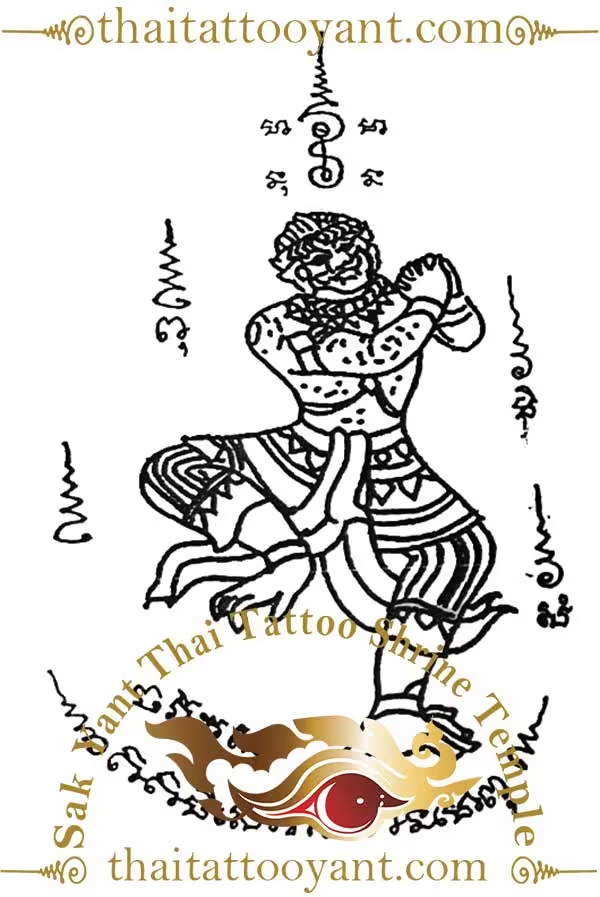
Divine warrior elements: He typically wears ornate armour, crown, necklaces, and has a flowing tail. The posture combines devotion (hands gesture) with action (dance/movement), symbolizing joyful service, fearless performance under pressure, and mastery of body and spirit.
Surrounding Thai Khom script: Sacred mantras (often around the figure or in a grid) activate the yant’s power, tying it to protection, loyalty to higher principles (like Rama), and invocation of Hanuman’s supernatural abilities (strength, flight, invincibility).
Below
Yant Hanuman Song Kr Pranom (ยันต์หนุมานสองกรประนม) or Yant Hanuman Pranom Hatth — the Hanuman with hands in prayer (Anjali mudra) pose.
In traditional listings of the classic 9 or 10 Hanuman Yants (a series of Hanuman designs), this is typically identified as the 3rd Hanuman (ตัวที่ 3).
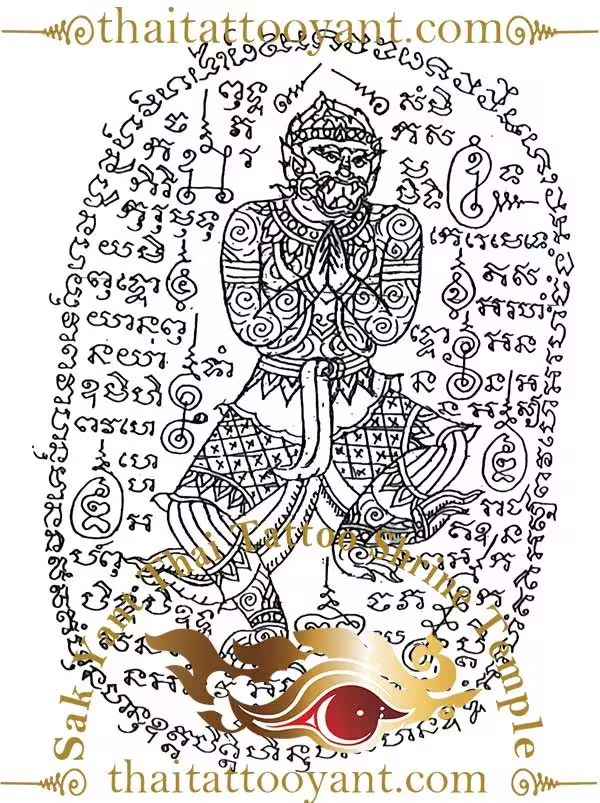
This differs from:
The prayer-hands static pose (more devotional, focused on humility and Triple Gem protection).
The trident-holding warrior pose (aggressive battle energy).
The dancing version blends grace with power, energy and celebration rather than purely combat.
Core Meaning and Benefits
This yant channels Hanuman’s legendary traits as the ultimate loyal, agile, and invincible warrior-devotee:
Protection from the Triple Gem (พระพุทธ พระธรรม พระสงฆ์คุ้มครอง) — Strong spiritual safeguarding by the Buddha, Dharma (teachings), and Sangha (monastic community). It is said to ward off danger, black magic, evil spirits, and misfortune through divine/religious merit rather than raw physical force.
Metta Maha Niyom & charm — Kindness, likability, and support from others. Wearers often experience people being helpful, merciful, or favourably inclined towards them.
Success through devotion and right action — Victory in life and work comes not only from fighting but from righteous conduct, focus, and alignment with higher principles. This promotes endurance, quick-witted agility, and rising above challenges.
Agility, quick-witted and adaptability — The dance pose represents nimble movement through life’s challenges, quick thinking, and graceful navigation of obstacles (like Hanuman leaping across oceans or outmanoeuvring enemies in epic battles and dances).
Strength, courage, and fearlessness — Even in “dance” (a metaphor for performing under scrutiny or adversity), Hanuman remains powerful and undefeated. Wearers gain resilience, confidence, and the ability to face difficulties with joy and determination rather than fear.
Loyalty, devotion, and charisma — Hands-together elements emphasise humility and service to righteousness. It brings likeability, influence over others, and harmonious energy — people are drawn to the wearer’s positive and magnetic presence.
Victory, success, and protection — Overall, it grants triumph in endeavours (work, competition, life struggles), protection from harm or negativity, with the “immortal” spirit of Hanuman rising again through perseverance. Some interpretations link it to success through skillful performance (e.g., in arts, sports, or public roles).
Cultural Context
In Khon dance (a high art form depicting Ramakien stories), Hanuman’s raim (dance sequences) showcase his playful yet heroic nature movements. The Sak Yant version spiritualizes this: the “dance” is not mere entertainment but a sacred expression.
Below
Hanuman Tua Si (Suriya) Yant
The Hanuman Tua Si Yant (or Tua See), often associated with the name Suriya, with 4-faces / multi-faced elements: Earth, Water, Wind, and Fire), is a specific variant of the Sak Yant Hanuman design, (Hanuman the Sun/Extinguisher of Fire). Key Characteristics “Tua Si” (ตัวสี or ตัวสี่) refers to the “fourth” or a particular form of Hanuman in the series of Hanuman Yants (variants numbered like Tua Ha for 5, Tua Kao for 9, etc.). Below |
Sak Yant Hanuman Thue Hok
This is another powerful variation in the Hanuman Sak Yant series (ยันต์หนุมาน), specifically the Hanuman holding a spear (often called Yant Hanuman Thue Hok
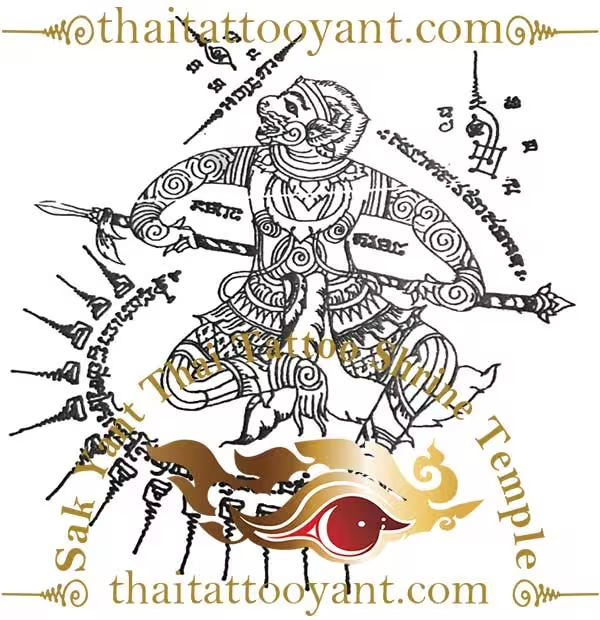
Visual Symbolism
The spear (หอก or hok/lance): A long-reaching weapon symbolizing stability, precision, and extended power. It represents the ability to strike at a distance, pierce through obstacles or enemies, maintain balance in combat, and achieve victory over far-reaching challenges. In some multi-weapon depictions, the spear specifically stands for stability and strength to overcome barriers.
Hanuman’s dynamic pose: Typically shown armored, with flowing tail, crown, and energetic stance — embodying agility, superhuman strength, and readiness for battle as the loyal general of the monkey army in the Ramakien (Thai Ramayana).
Below
Dancing Crouched Sak Yant Hanuman
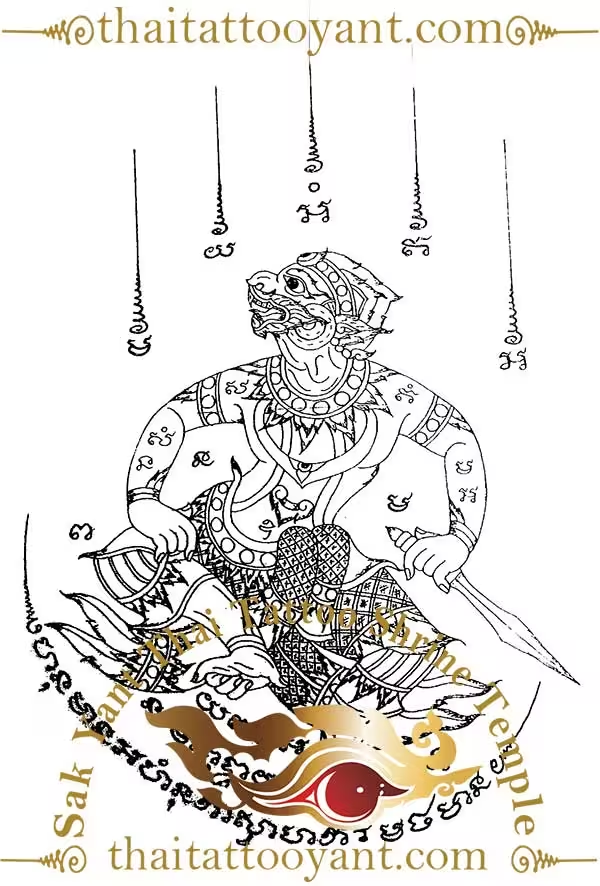
This design features the crouched monkey warrior and is the classic Yant Hanuman (ยันต์หนุมาน)—specifically depicting Hanuman in a dynamic, Dancing ready-to-strike combat stance. |
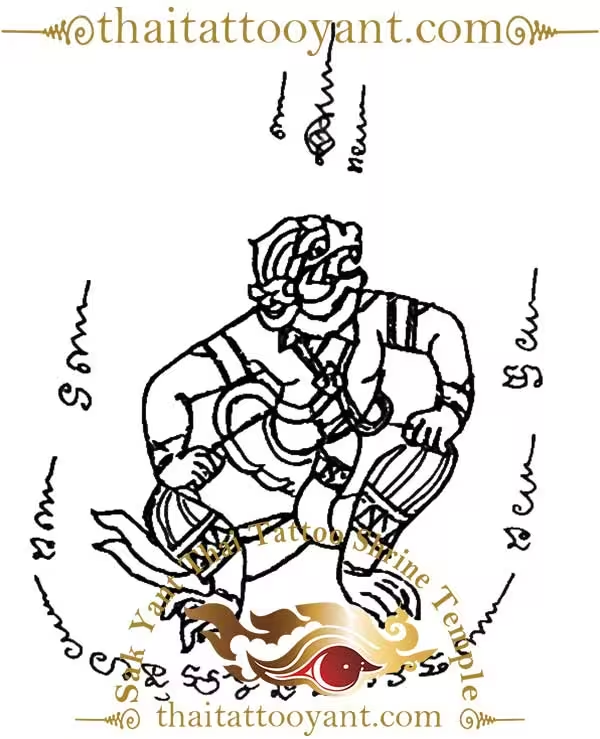
As the mythical vanara commander from the Ramakien (the Thai epic adaptation of the Ramayana), Hanuman represents the ultimate combination of physical strength, strategic brilliance, flawless agility, and fierce loyalty.
The Design & Symbolism
The Central Figure: Hanuman is shown in a crouched martial stance, displaying high muscular tension and focus. His coiled tail acts as an internal shock absorber, symbolizing balanced power and quick reflexes.
The Surrounding Arc: Wrapping around his lower body is a semi-circular arc of continuous Thai Khom script characters. These represent specific activation mantras (Kata) meant to invoke his spiritual presence.
The Top Spire: Above Hanuman’s head float a cluster of foundational syllables topped by three distinct Unalome spirals. These act as spiritual antennae, channeling higher celestial guidance so his raw martial strength remains disciplined and focused.
Below
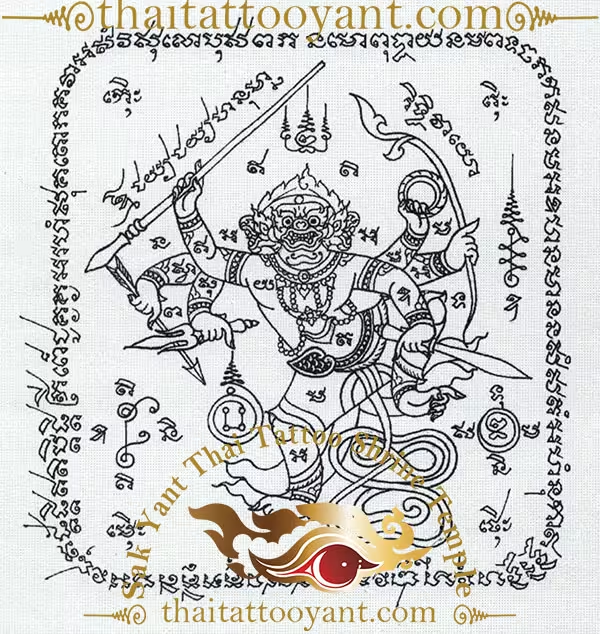
powerful pictorial Sak Yant of Phra Narai with 12 arms
This is a powerful pictorial Sak Yant of Phra Narai with 12 arms (sometimes called variations of Yant Phra Narai or Narai Song Suban style, though this one is standing/dancing dynamically rather than mounted on Garuda).
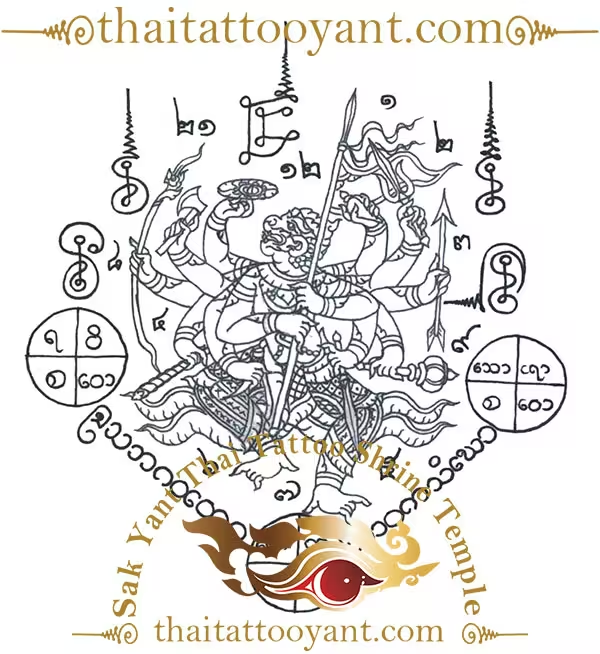
12 arms symbolism: In Hindu and Thai iconography, multiple arms represent the deity’s omnipotence — the ability to act in all directions simultaneously, wield divine weapons, and maintain cosmic balance. Vishnu’s avatars and forms often emphasize preservation, protection, and victory over evil.
Meaning and Powers
Invincibility and protection — Shields the wearer from physical danger, weapons, black magic, accidents, and enemies.
Strength, authority, and victory — Enhances courage, leadership, success in conflicts (legal, business, or personal), and the ability to overcome obstacles.
Balance and prosperity — Brings stability, good fortune, charisma, and the “preserving” energy of Vishnu (maintaining harmony in life).
Spiritual power — Mon script (or Mon-influenced style) — Derived from the ancient Mon people (Dvaravati period and northern/Isan regions).
Cultural Note
Depictions with many arms (8, 10, or 12) are common in Thai sacred art for major deities like Vishnu, Shiva, or Hanuman (who also has popular 12-armed Sak Yant versions). This specific design draws from Thai-Brahmin traditions and is considered one of the stronger pictorial yants.
Below
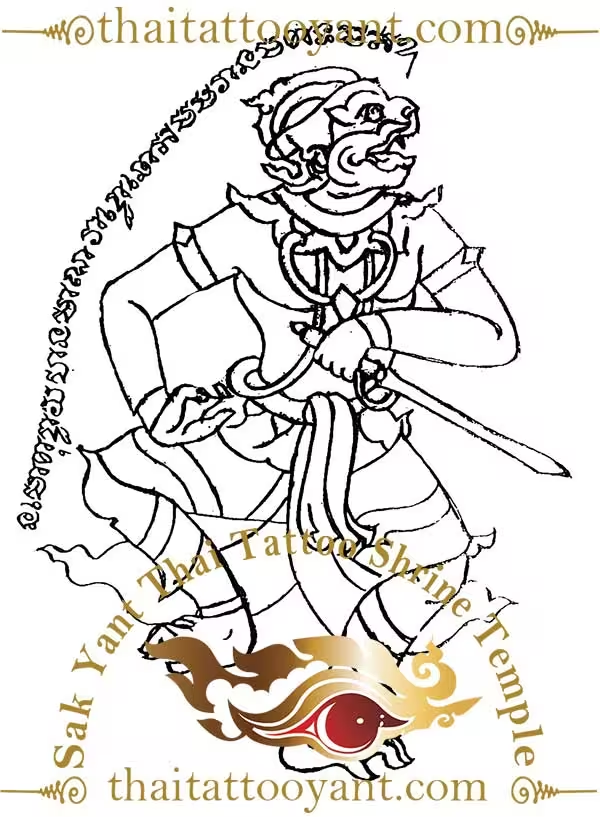
Hanuman with Sword Yant Thue Dab (ยันต์หนุมานถือดาบ).
It depicts Phra Hanuman (the Monkey God) in a fierce warrior pose, raising a sword (ดาบ) in his right hand, ready for battle. This is one of the classic pictorial variations of Hanuman Sak Yant.
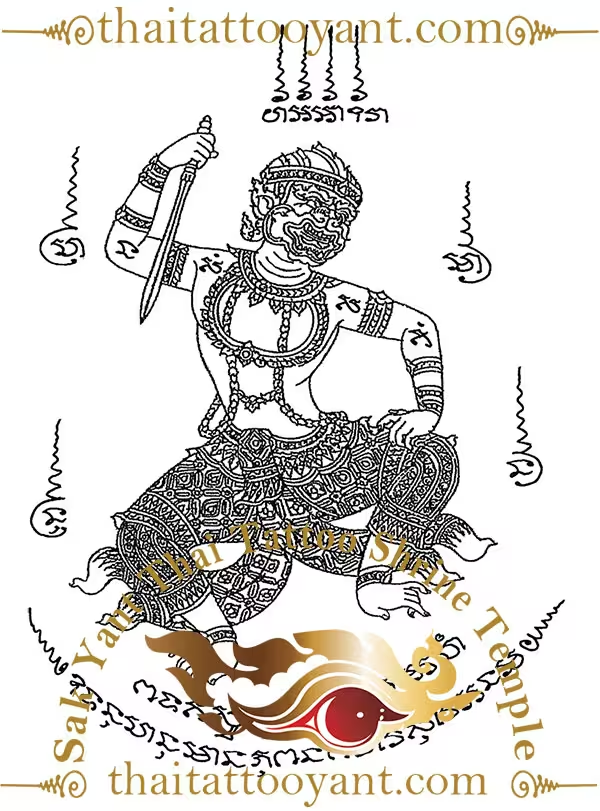
Key Details
Pose and Symbolism: The raised sword represents readiness to cut through obstacles, enemies, and evil forces. The dynamic stance emphasizes action, courage, and combat prowess.
Surrounding Mantras: The top and curved bottom texts are sacred invocations Thai Kata script that empower the design with protective spells.
Meaning and Powers (พุทธคุณ)
Strength and Invincibility — Grants physical/mental power, protection from weapons, accidents, and harm.
Courage and Fearlessness — Helps face dangers, enemies, or challenges without fear.
Victory Over Obstacles — Success in conflicts, competitions, legal matters, or life battles (the sword symbolizes cutting through problems).
Loyalty and Determination — Enhances perseverance, focus, and loyalty to goals or people.
Protection from Evil — Wards off black magic, spirits, and negative energies.
Below
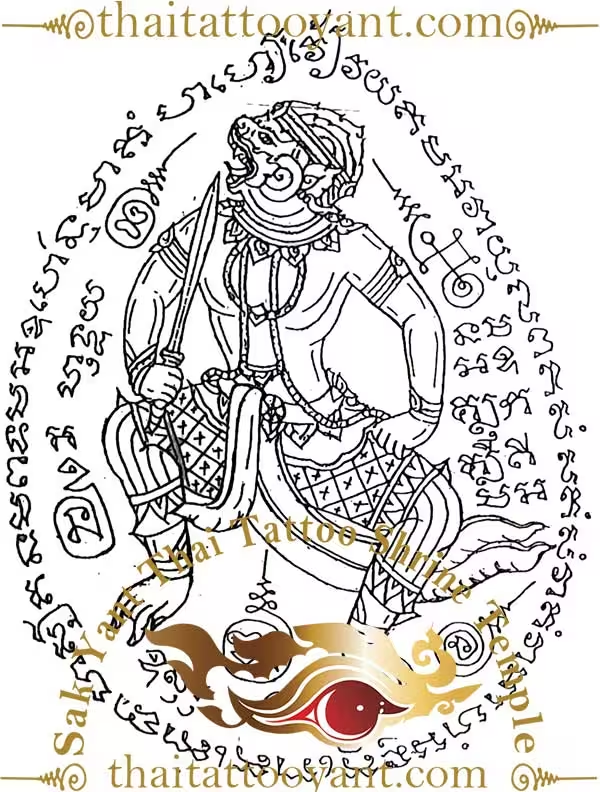
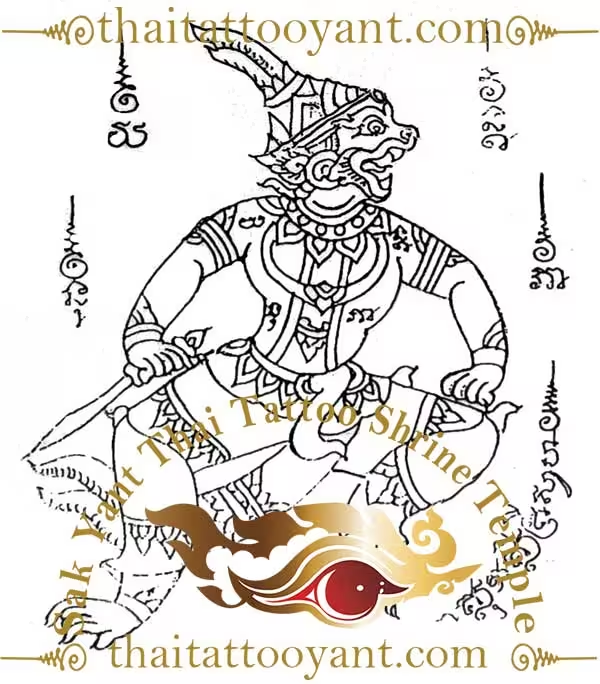
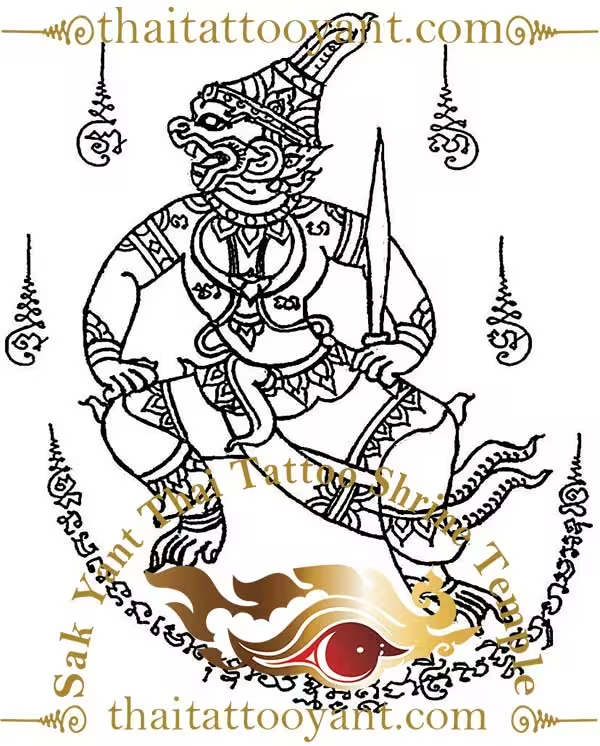
Identification
Central Figure: Phra Hanuman in a powerful, dynamic warrior pose (seated or lunging), gripping a sword in his right hand. He wears traditional ornate armor, with his fierce monkey face and expressive posture showing readiness for battle.
Design Style: Circular/oval frame filled with sacred mantras in ancient script (Mon-influenced or hybrid style, matching your previous images). This enclosed circular format is common for focused power concentration in Sak Yant.
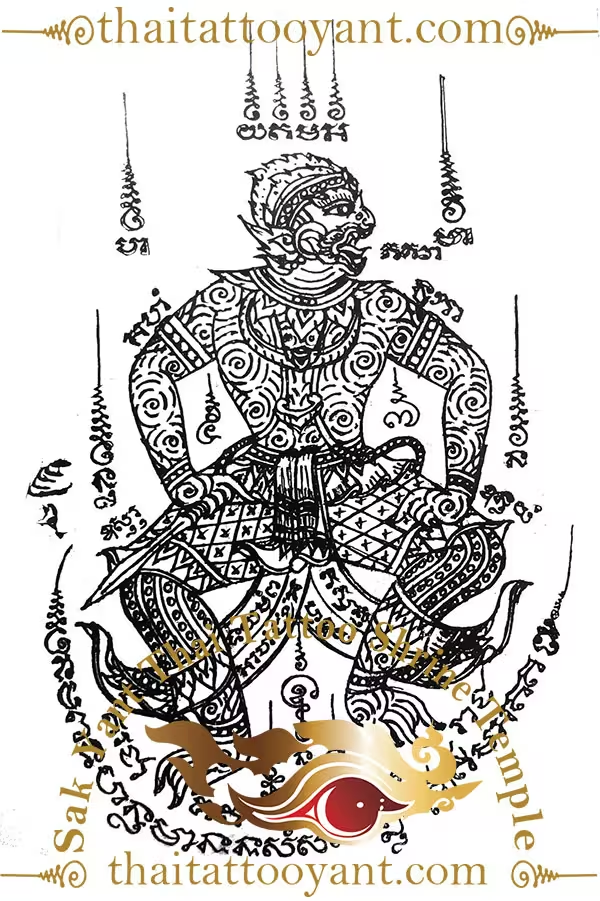
Hanuman Song Suban style
Key Elements
Central Figure: Phra Hanuman in a strong, grounded combat pose with legs apart, wearing highly detailed traditional armor and ornaments.
Surrounding Features: Sacred Thai Kata mantras script at the top and bottom, with hanging spiral motifs (typical “bones” of Sak Yant) framing the design. The overall composition is symmetrical and powerful.
Below
Yant Hanuman Thue Trisul" (ยันต์หนุมานถือตรีศูล)
This is “Yant Hanuman Thue Trisul” (ยันต์หนุมานถือตรีศูล) — Hanuman holding a trident.
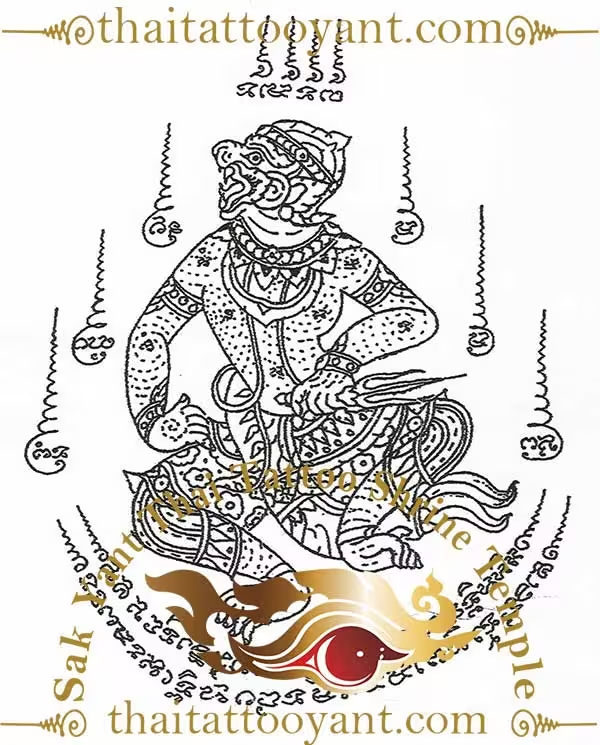
Identification
Central Figure: Phra Hanuman in a powerful seated/crouched warrior pose, with his signature monkey face, ornate traditional attire, and holding a trident (ตรีศูล) — a three-pronged spear-like weapon.
Surrounding Elements: Sacred mantras in Thai Kata ancient script.
Meaning and Powers (พุทธคุณ)
The trident adds layers of symbolism from Hindu-Buddhist traditions, often associated with Shiva’s destructive/ transformative power
Invincibility & Protection — Strong defense against weapons, accidents, black magic, evil spirits, and physical harm (คงกระพันชาตรี + แคล้วคลาด).
Supreme Strength & Power — Enhances physical, mental, and spiritual power. The trident represents mastery over the three realms (heaven, earth, underworld).
Victory & Overcoming Enemies — Triumph over obstacles, rivals, or problems. Great for competition, conflict, or overcoming adversity.
Authority & Charisma — Boosts leadership, respect from others, and influence.
Courage & Fearlessness — Helps face challenges boldly, with unwavering determination (Hanuman’s core trait).
Below
Yant Hanuman Thue Thong
This is “Yant Hanuman Thue Thong” (ยันต์หนุมานถือธง) or “Hanuman with Flag” — a dynamic warrior variation of Hanuman Sak Yant.
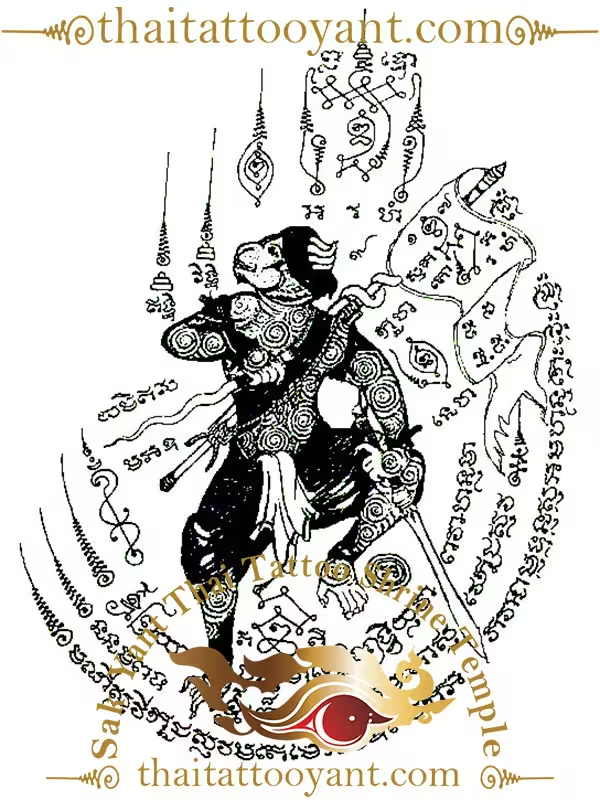
Identification
Central Figure: Phra Hanuman in a powerful, leaping/charging pose. He holds a sword in one hand and a victory flag/banner (ธง) in the other. This is a classic depiction emphasizing movement and triumph.
Design Elements: Richly detailed armor, flowing ribbons, and a dense arrangement of sacred Thai Kata mantras Yants surrounding the figure, plus traditional spiral and geometric symbols.
Below
Hanuman King or Phra Hanuman style
This is a powerful variation of “Yant Hanuman” (ยันต์หนุมาน), specifically a regal/divine depiction often called “Hanuman King” or “Phra Hanuman” style.
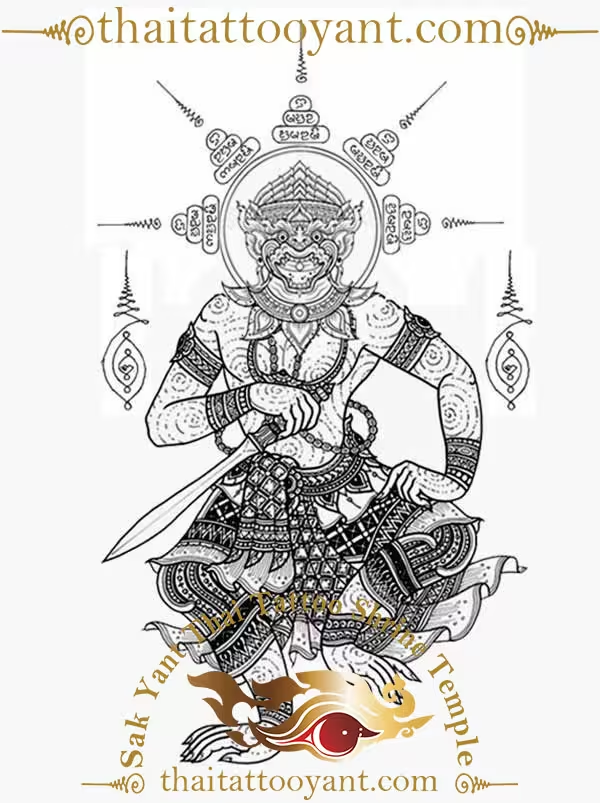
Key Elements
Central Figure: Phra Hanuman (the Monkey God) in a commanding, dynamic warrior pose. He has a fierce monkey face, wears an ornate crown with a radiant halo/aura around his head (emphasizing divine status), detailed traditional armor, and holds a sword (ดาบ) in a ready stance.
Design Features: Symmetrical composition with decorative motifs, spirals, and likely surrounding Thai Kata sacred Yants, mantras.
The halo/crown gives this version a more elevated, god-like presence compared to the purely warrior-style Hanuman designs you’ve shared earlier.
Social Media Links
Bangkok Ink Tattoo Group – Associates in Business
Sak Yant Tattoo Designs
Sak Yant Designs
Thai Tattoo Designs
Thai Tattoo Yant Designs
Tiger Web Geek, Website Design, Hosting, SEO, Marketing
Thai Tattoo Sak Yant UK Tours
Bangkok Ink Studio, Machine, Hand Poke Tattoos, Tattoo Removal, VIP Service to Ajarn Ohr
Tattoo School Thailand Bangkok
Asian Artifacts oneshopasia.com
Thai Tattoo Sak Yant USA
...
Skindiver Tattoo Studio, Gothenburg, Sweden
inktattoo.se Tattoo Studio
Skin Graffiti Tattoo Studio UK
Happysailortattoo.com Old School Tattooing
Ink Tattoo Studio
jourservice
The Tattooed Gent Studio