
Hanuman Sak Yant Thai Tattoo Leaping
Hanuman Tua Hah Chern Thong Sak Yant "Hanuman Raising the Flag"
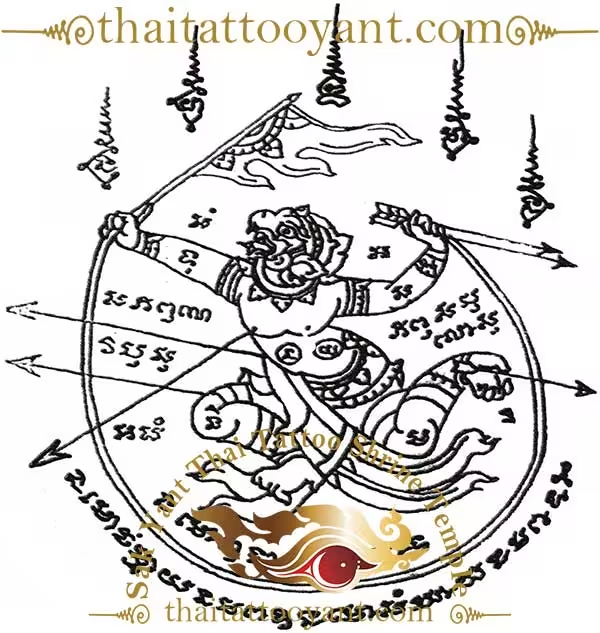
The Hanuman Tua Hah (meaning “Hanuman Number Five”) is a powerful variant of the Monkey God Sak Yant, typically representing Hanuman in his warrior form, geared for victory and absolute protection and unwavering devotion to King Rama.
Key traits from the Ramakien (Thai Ramayana).
The specific inclusion of a Flag, Arrows, Sword, and 5 Unalome Spires makes this a “complete” talisman for leadership and overcoming all forms of opposition.
Core Meaning and Symbolism
Each element of this intricate design adds a specific layer of spiritual power:
Hanuman (Tua Hah): Represents the Monkey God as a “divine warrior”. It grants the wearer fearlessness, immense physical and mental strength, and the ability to overcome any obstacle.
Additional Symbols: Decorative elements on the sides and top enhance the protective field.
The Victory Flag (Chern Tong): Symbolises triumph and success in all endeavors and is believed to help the wearer rise above their competition and conquer challenges in both work and life and leading King Rama’s army.
The Sword: A symbol of Kong Krapan (invincibility) and Chana Satru (victory over enemies). It represents the power to cut through negativity and physically or spiritually defeat opponents.
Warrior Spirit: Unlike defensive Yants like the Gao Yord (Nine Peaks), Hanuman Tua Hah provides “offensive” energy—giving the wearer the mental and physical toughness to actively push through challenges.
Agility, speed, and swift action: The leaping/flying pose represents the ability to overcome obstacles quickly, “leap” over difficulties, and adapt rapidly to challenges.
Strength, courage, and fearlessness: Invincibility in the face of danger or adversity.
Protection and invulnerability: (Kong Grapan) — Shielding from harm, weapons, accidents, evil spirits, and black magic.
Loyalty, perseverance and power: Unwavering devotion combined with immense personal strength and charisma.
5 Unalome Spires: These represent the path to enlightenment and the five Buddhas. In this context, they act as “lightning rods” for divine energy, ensuring the power of the Yant is grounded in Buddhist virtues. Intended Benefits and elemental balance (Fire, Water, Air, Earth, and Spirit)
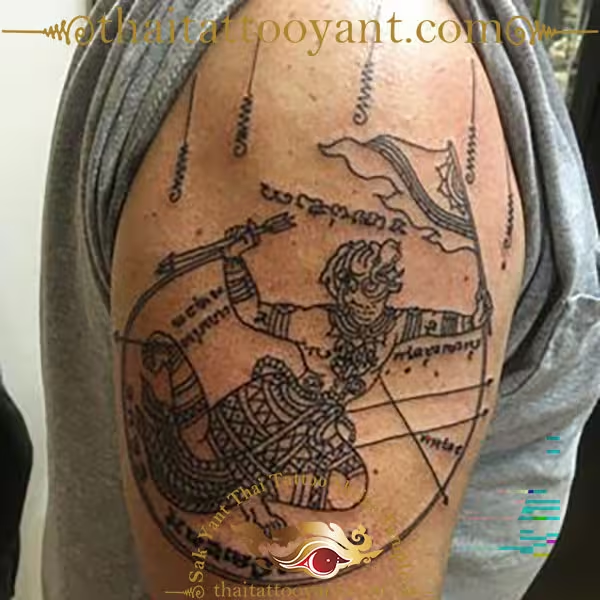
Dynamic leaping Hanuman yantras (sometimes called variants like “Hanuman leaping” or “Hanuman manifesting power”) are particularly potent for those needing quick reflexes, mobility in difficult situations, or enhanced performance in competitive/high-energy fields (e.g., athletes, fighters, travelers, or anyone facing rapid changes).
Spiritual Benefits
Based on traditional Thai beliefs, these Yants provides a specific combination of blessings:
Wearers of this specific design typically seek:
Maha Amnaj (Authority): Enhances authoritative power and leadership, helping the wearer command respect.
Chana Satru (Victory over Enemies): Specifically grants the ability to defeat rivals, whether in business, sport (like Muay Thai), or personal conflicts.
Kong Grapan: Invincibility or extreme physical resilience.
Self-Confidence: Enhances bravery and determination, allowing the wearer to remain focused under pressure.
Klaew Klaad (Evasion): A blessing that ensures the wearer avoids serious accidents or physical injury.
Choke Larp: While a warrior Yant, it is also believed to bring unexpected good luck and fortune.
Below
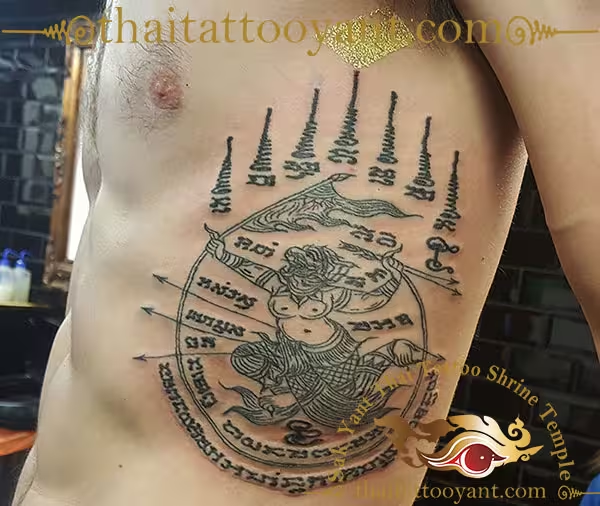
Hanuman Tua Chern Thong Yant with 7 Unalomes
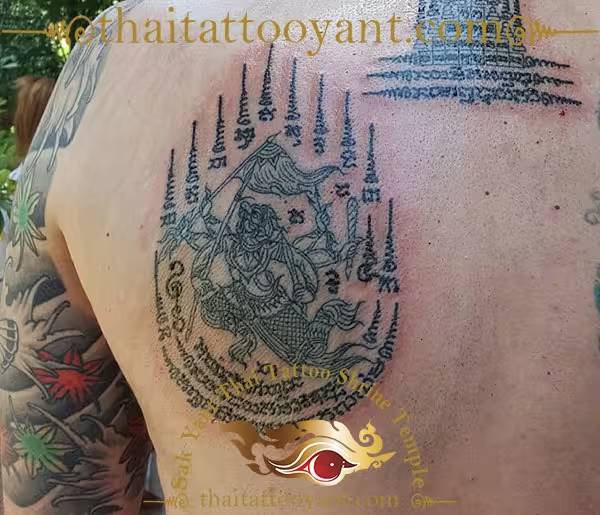
Hanuman Tua 11 Unalome Spires Yant
The Hanuman Tua 11 (Hanuman Number 11) with 11 Unalome Spires is a highly complex and spiritually “loaded” version of the Monkey God Sak Yant. While common versions like the Tua Hah (5) or Tua Kao (9) focus on specific sets of blessings, the 11-spire design is often seen as a “super-charged” variant that combines extreme warrior energy with a wide-reaching spiritual shield.
Core Symbolism of the 11 Spires
The number 11 in Sak Yant often refers to the 11 Virtues or Powers associated with high-ranking celestial beings or specific Buddhist protections.
The Unalomes: Each of the 11 spires represents an individual path to enlightenment. Together, they form a “crown” of protection around the Hanuman figure.
Spiritual Hierarchy: While 9 spires (Gao Yord) represent the nine peaks of the mythical Mount Meru, 11 spires typically signify a more specialized or “expanded” blessing, often tailored by a specific Ajarn (master) to include extra layers of luck or invincibility.
Meaning of Hanuman Tua 11
In this form, Hanuman is portrayed as a supreme commander. The “Tua 11” designation implies he is endowed with 11 distinct supernatural qualities:
Metta Mahaniyom: Despite his warrior nature, the 11-spire version often includes lines for compassion and popularity, helping the wearer influence others positively.
Intended Wearers
This Yant is typically chosen by:
Leaders and Executives: Who need both the strength to face challenges (Hanuman) and the authority to lead effectively (Amnaj).
Professional Fighters and Athletes: Seeking mental toughness and a “warrior spirit” that cannot be broken. For maximum power, endurance.
High-Risk Professionals: Those in law enforcement or the military who desire maximum protective “armor”.
High-Level Leaders and Business Owners: Individuals navigating intense professional rivalries or complex organizational challenges.
Soldiers and Police Officers: Those in high-risk professions who face physical danger and require a strong presence of authority.
Individuals Facing Major Transitions: People who need to tap into their “inner warrior” to overcome significant life hurdles or move through a difficult period of change.
Placement
Because Hanuman is a divine figure, this Yant must be placed anywhere above the waist. Below the waist is disrespectful.
Below Some more Examples Hanuman Tua
Jet = 7 Unalome Hanuman Tua with 8 arms.
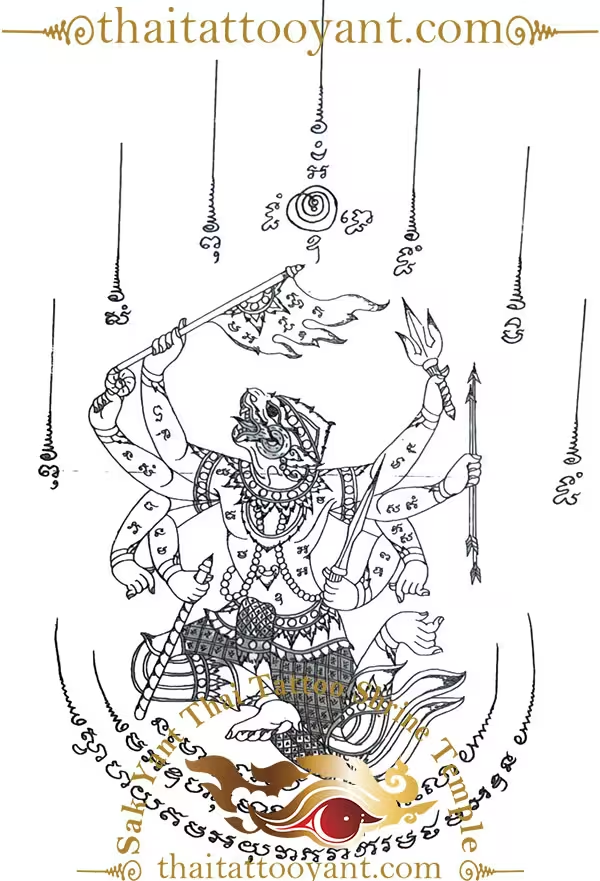
Below 5 Unalomes with 2 Arms
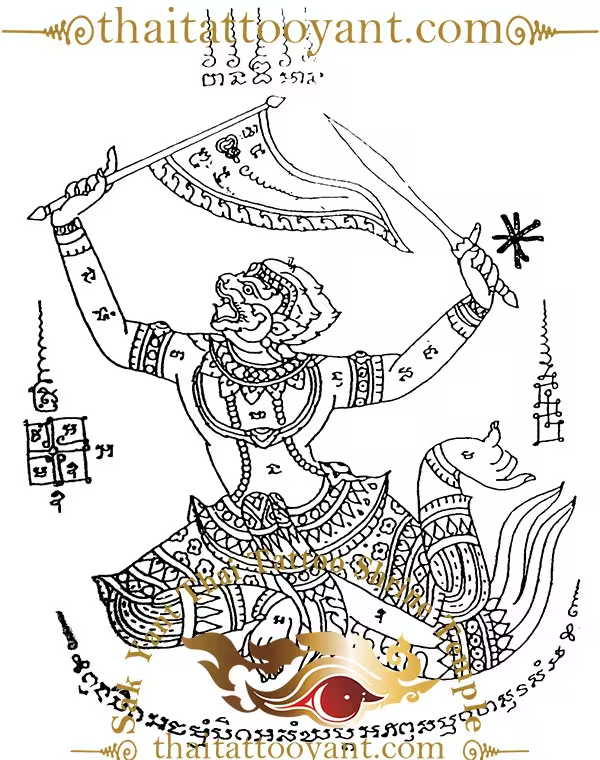
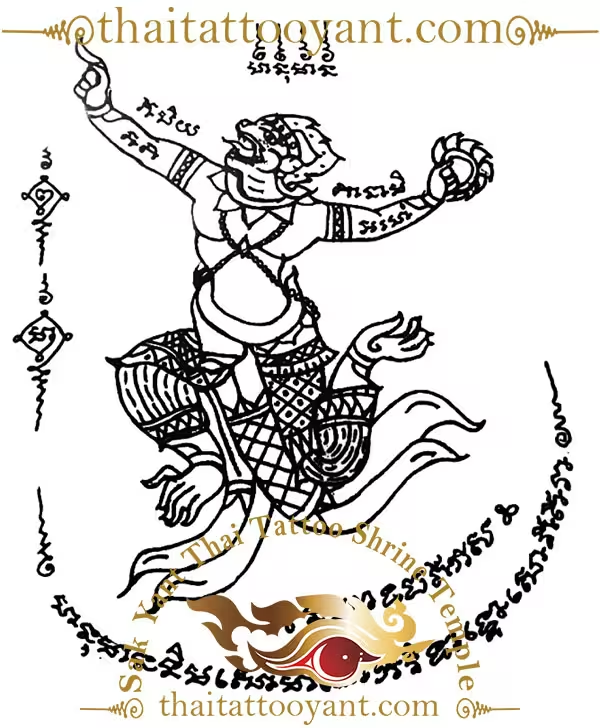
Below with 2 Arms
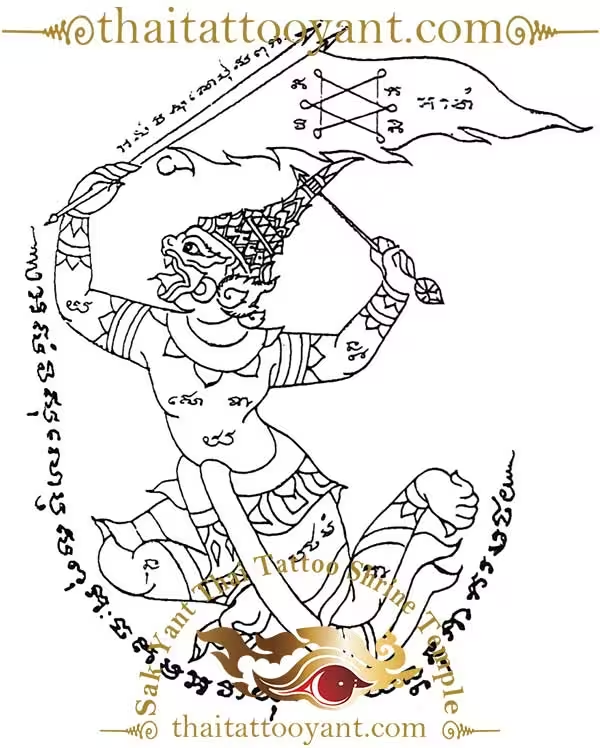
Below with 4 Arms
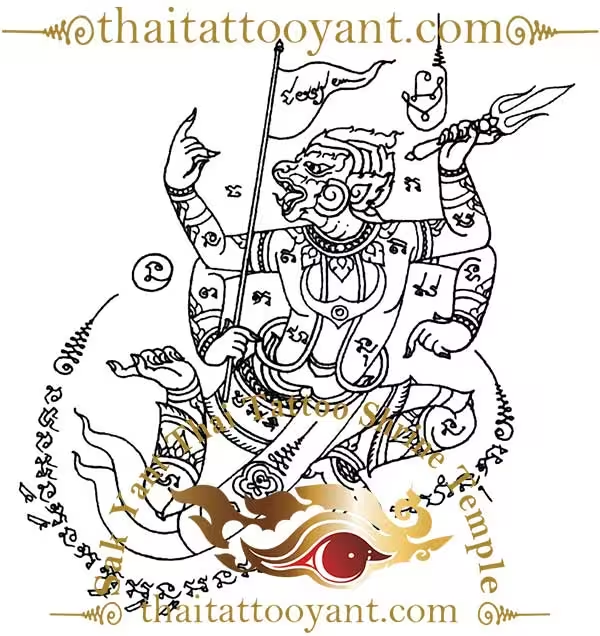
Yant Hanuman Chern Thong
This design is a variation of the Yant Hanuman Chern Thong (Hanuman Bearing the Battle Flag), specifically focusing on a single, highly dynamic depiction of Hanuman manifesting his four-armed divine power (Phlaeng Rit).
While the twin version represents dual balance, this single-figure design represents concentrated, unstoppable personal willpower and command. Here is the breakdown of its specific iconography and spiritual meaning:
It can be a bit tricky to trace with all the intricate detail and the Khom script woven around him, but you can spot them by looking at his shoulders:
• Arm 1 (Upper Right): The one pointing directly up to the sky.
• Arm 2 (Lower Right): The one reaching across to hold the flagpole.
• Arm 3 (Upper Left): The one raised high, holding the trident (Tri Petch).
• Arm 4 (Lower Left): The one pointing down toward his front leg.
In the Ramakien epic, Hanuman normally looks like a regular monkey warrior with two arms. However, whenever he needs to go into full battle mode, show off his supreme authority, or fight high-ranking demons, he transforms (Phlaeng Rit) to reveal his divine form with four, eight, or sometimes even more arms, wielding a different celestial weapon in each hand.
Below
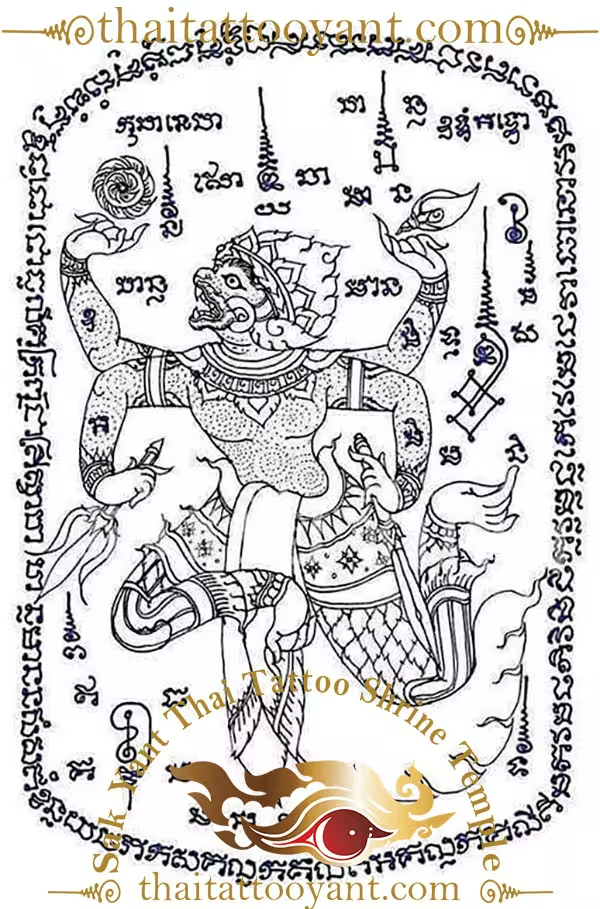
4-armed Hanuman Si Korn หนุมานสี่กร
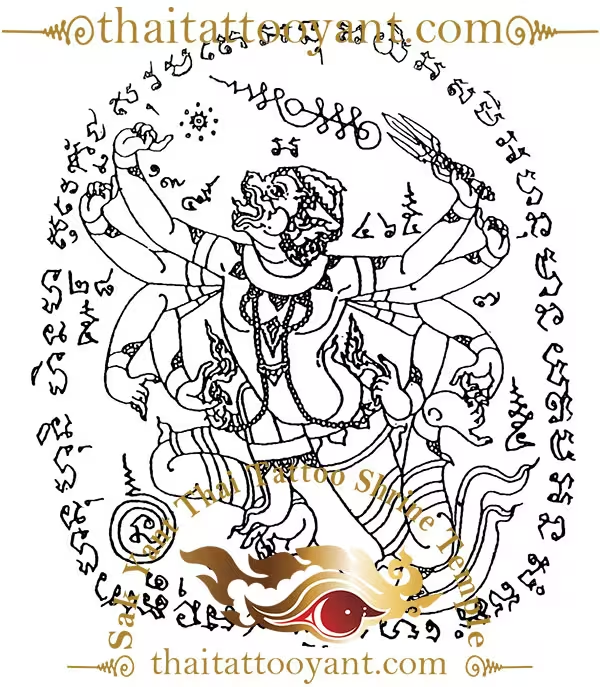
This is a 4-armed Hanuman Si Korn หนุมานสี่กร, Sak Yant in a dynamic, fierce warrior pose within a circular/oval frame.
Key Elements
Hanuman: The monkey god shown with exactly 4 arms, holding weapons (including a trident/spear and other ritual arms), mouth open in a roar or battle cry, conveying aggressive power and readiness.
Pose: Dynamic and commanding — one leg forward, body in motion, symbolizing agility, speed, and active engagement in battle.
Circular/Oval Frame: Complete all-around protection and containment of the yantra’s energy.
Surrounding Script: Thai Kata Scipt containing sacred mantras (Yant kata) that invoke Hanuman’s blessings.
Core Meaning and Powers for all these Designs
The 4 arms represent balanced power across the four directions/elements, allowing Hanuman to protect, attack, and bless simultaneously. This design channels:
Strength, courage, and invincibility — Physical and spiritual resilience; resistance to harm and danger (Kong Grapan).
Victory and success — Overcoming enemies, obstacles, competition, or challenges (Chana Satru).
Protection — Shielding from weapons, evil, black magic, accidents, and misfortune.
Agility, loyalty, and perseverance — Swift action, unwavering determination, and the ability to leap over difficulties.
Authority and charisma — Enhanced leadership presence and respect from others.
4-armed versions are potent and slightly more focused/balanced than the 8- or 12-armed variants.
Below
Chern Thong Hanuman Yant
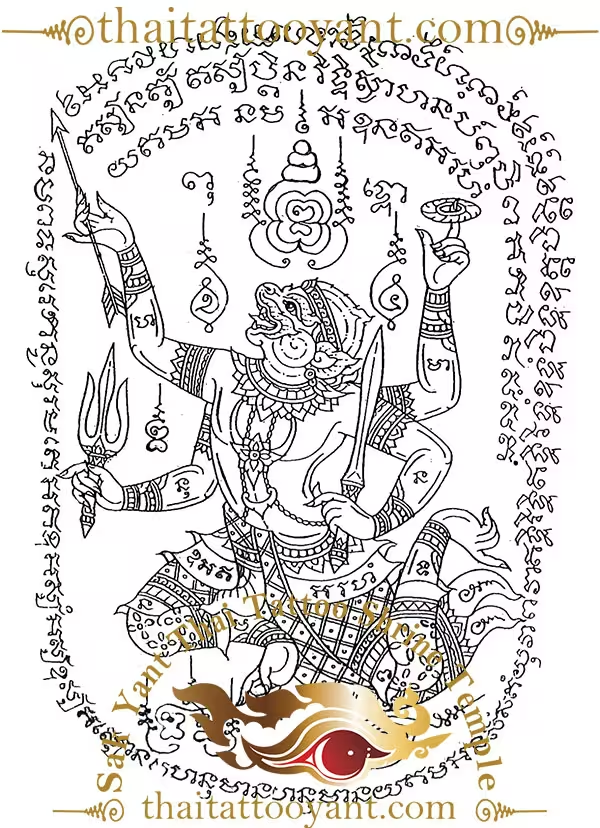
This is a powerful multi-armed Hanuman Sak Yant (ยันต์หนุมาน), specifically a four-armed (or multi-weapon) variation, often called Yant Hanuman Chern Thong (Hanuman with Victory Flag) or like this one an advanced form of Hanuman with weapons of power.
Visual Description (from the design)
Central Figure: Hanuman, the divine monkey god from the Ramakien (Thai Ramayana), in a dynamic warrior pose. He has multiple arms (typically four in this style) holding sacred weapons:
Trident (Trishula): Symbolizes mastery over the three realms (heaven, earth, underworld), protection against black magic, and destructive power against evil.
Spear or Sword: Authority, cutting through obstacles/negativity, and combat prowess.
Flag/Disc or other item: Victory banner (Thong Chai / Chern Thong), representing triumph.
Arrows and Bows: Arrows symbolize focused intent, piercing through obstacles/enemies, accuracy in action, and strategic victory. Striking from afar.
Surroundings: Encased in a circular/oval border filled with Thai Kata Skript — sacred mantras/kata that activate the yant’s power.
Below
Yant Hanuman Paed Gorn
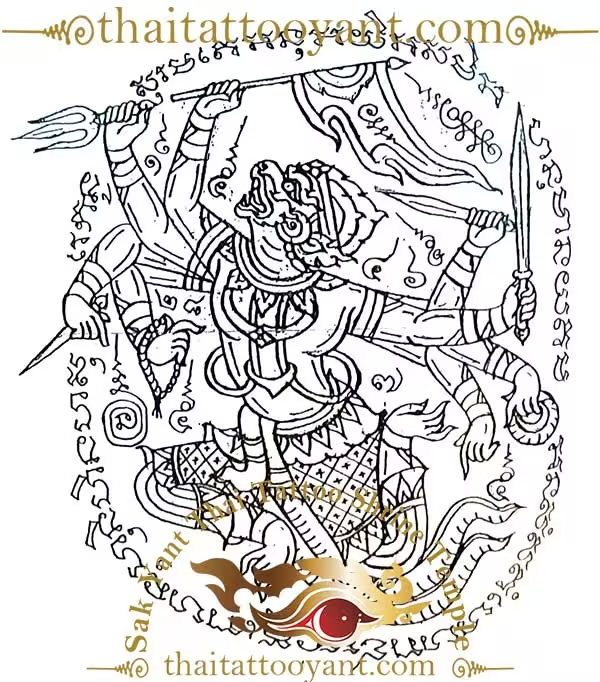
This design is Yant Hanuman Paed Gorn (ยันต์หนุมาน 8 กร) (Hanuman with Eight Arms), a high-level warrior Yant similar to the multi-armed variations previously discussed.
Identification
The Figure: It depicts Hanuman in an active combat form, manifesting multiple arms to wield divine weapons.
Weapons: Includes a trident (or spear), sword, and others, showing readiness for battle on all fronts.
Raised Flag/Banner: The most prominent feature — represents victory (Chana Satru), leadership in triumph, and planting the standard of success. Hanuman is depicted advancing or charging while raising the flag.
Circular composition: Offers all-around (360-degree) protection and balance.
Sacred Frame: The design is enclosed within a border of Thai Kata script, which acts as a protective “wall” of mantras surrounding the deity.
Below is another name for it.
Yant Phra Hanuman Chern Thong
Yant Phra Hanuman Chern Thong (ยันต์พระหนุมานเชิญธง) or Hanuman Raising the Victory Flag/Banner
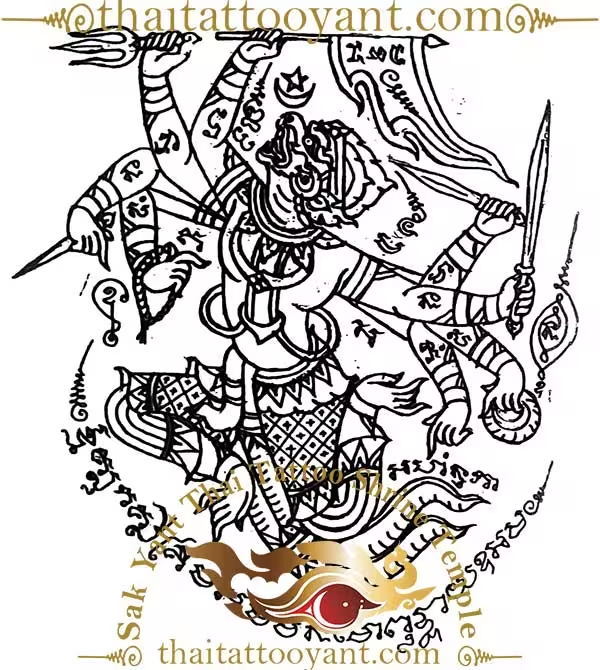
Sak Yant of Hanuman Paed Korn
This is a dynamic circular Sak Yant of Hanuman Paed Gorn / 8-armed variant) in a powerful, lunging warrior stance.
Hanuman: The monkey god in an active, battle-ready pose with multiple arms radiating power. He holds weapons (including a prominent trident in one raised hand), symbolizing his role as an invincible warrior.
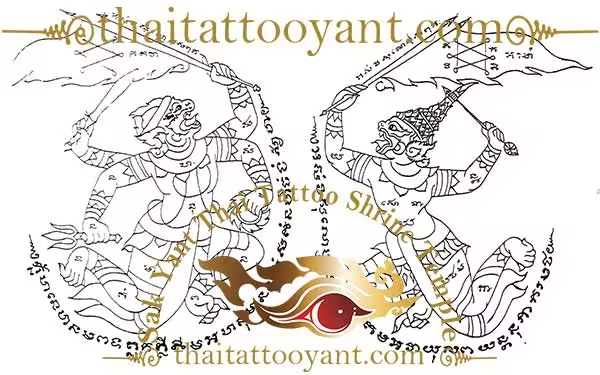
Yant Hanuman Chern Thong Khu
This image displays a classic, powerful Sak Yant (sacred Thai tattoo) design known as Yant Hanuman Chern Thong Khu (Twin Monkey Warriors Bearing Battle Flags).
It features two of the most formidable simian generals from the Ramakien (the Thai epic adaptation of the Ramayana) charging into battle. Here is a detailed breakdown of the iconography and its traditional spiritual meanings.
The Core Iconography
1. The Left Figure: Hanuman Phlaeng Rit
The figure on the left is Hanuman, the immortal monkey general and devoted warrior of Phra Ram. He is depicted here manifesting his divine power (Phlaeng Rit), shown with four arms to wield an array of celestial weapons:
The Battle Flag (Thong Chai): Held high in his primary hand, signaling the charge and ultimate triumph.
The Sword (Daab): Representing the ability to cut through obstacles and sever the malice of enemies.
The Trident (Tri): A weapon of supreme divine authority, associated with cosmic power.
The Discus (Chakra): Symbolizing spinning, unstoppable energy and destruction of negativity.
2. The Right Figure: The Crowned Warrior (Nilapat)
The figure on the right represents Nilapat, the fierce monkey prince who matches Hanuman in sheer physical strength and magical prowess. While Hanuman is born of the wind god, Nilapat possesses immense dark-skinned fury and is often depicted wearing a royal Chada (pointed crown) due to his high lineage.
When paired together facing one another, Hanuman and Nilapat represent perfect balance, dual strength, and absolute dominance on the battlefield of life.
Spiritual Meanings and Intentions
In Thai spiritual culture, this specific design is highly revered for its intense energy. It is traditionally sought after for several core purposes:
Victory and Triumph (Chai-cha-na): Because both generals are raising the Thong Chai (victory flag), this yant is primarily used to ensure success over rivals, competitors, and legal or personal battles. It signifies always being at the front of the charge, never retreating.
Authority and Leadership (Amnat and Barami): This design is favored by military officers, law enforcement, corporate leaders, and anyone in a position of command. It is believed to instill fear or deep respect in subordinates and adversaries alike.
Invulnerability and Protection (Kong Krapan Chatri & Klaew Klaad): In the epic, Hanuman cannot die; if he is felled in battle, a gust of wind revives him instantly. This yant carries a strong blessing for physical protection against weapons, accidents, and unseen spiritual dangers.
Unyielding Stamina: It provides the wearer with relentless energy, mental sharpness, and the resilience to bounce back from setbacks.
Circular Sak Yant Leaping Hanuman
This is a circular Sak Yant of Hanuman (the monkey god) in a dynamic warrior pose, holding one sword raised high in his left hand (the other hand is likely in a gesture of power or holding a secondary object/symbol).
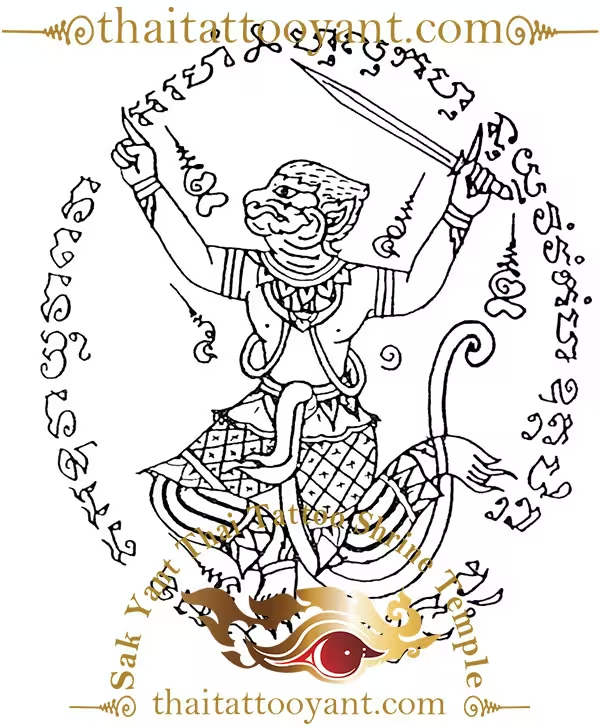
Meaning
Hanuman: The iconic warrior from the Ramakien (Thai Ramayana). He symb
olizes unmatched strength, agility, loyalty, courage, and victory over impossible odds.
One raised sword: Represents decisive action, cutting through obstacles, enemies, negative forces, or illusions. It emphasizes focused power, readiness for battle, and the ability to strike with precision and authority rather than overwhelming multiplicity.
Circular frame: Symbolizes complete protection from all directions (like a shield or mandala). The surrounding Thai Kata script (or Kata influenced Lanna/Tham style) contains sacred mantras (kata) that invoke Hanuman’s divine energy, charging the yantra with blessings.
Core blessings and powers:
Protection and invulnerability: Defense against physical danger, weapons, evil, black magic, or misfortune.
Strength, courage, and fearlessness: Mental and physical resilience; overcoming fear and adversity.
Victory and success: Triumph over competitors, challenges, or enemies (Chana Satru).
Charisma, authority, and perseverance: Leadership presence, loyalty, and the endurance to achieve goals.
Agility and swift action: Hanuman’s legendary speed and ability to “leap” over problems.
This design is a potent protective talisman, popular for those seeking warrior-like qualities in daily life, work, or spiritual practice. The circular format makes it balanced and self-contained — ideal for tattoos, amulets, or cloth yants.
Hanuman Chern Thong without Flag
“Hanuman empowered by sacred mantras, conquering enemies in all directions.”
This design represents victory, protection, courage, and authority, with Hanuman fully activated by surrounding spell formulas.
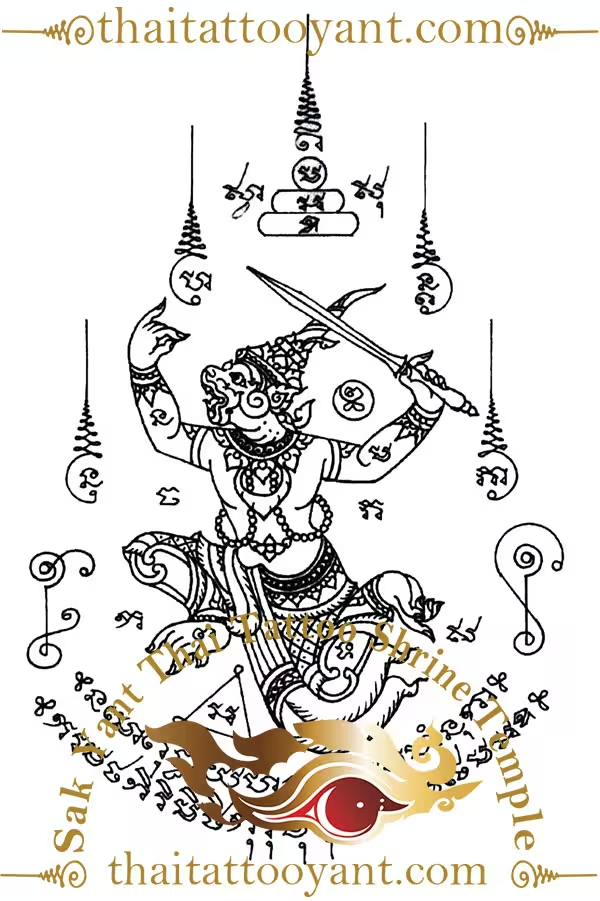
Hanuman’s central posture Standing upright with sword raised
Hanuman is shown upright and triumphant, holding a sword high.
This symbolizes:
Victory already gained
Strength used confidently, not desperately
Moral authority (fighting for righteousness)
Leadership and command presence
Unlike descending or attacking forms, this is a victorious posture, not a desperate one.
The raised sword (สำริด / ดาบ)
The sword raised above the head represents:
Cutting through enemies and obstacles
Justice and decisive action
Victory in conflicts (physical, legal, or competitive)
In Sak Yant belief, a raised sword means:
Power that is recognized
Enemies submit before attack is needed
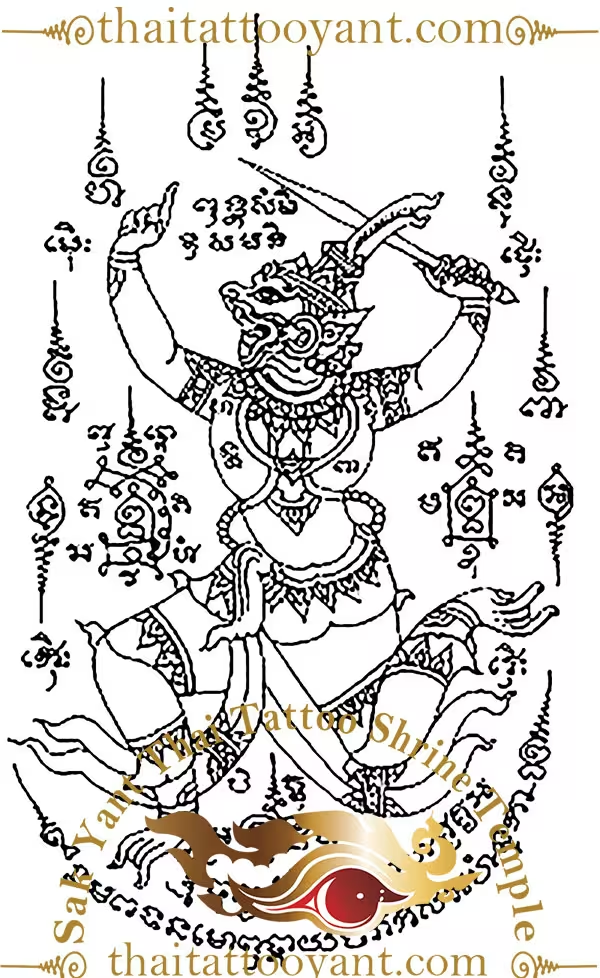
Hanuman’s expression
Hanuman’s face is confident and alert, not wild or enraged.
This indicates:
Controlled power
Intelligence over brute force
Courage with discipline
This version is preferred by leaders, commanders, and strategists, not reckless fighters.
Hanuman’s tail (curved upward)
The raised tail symbolizes:
High energy
Alertness
Readiness to strike again if needed
A downward tail shows rest; upward means active power.
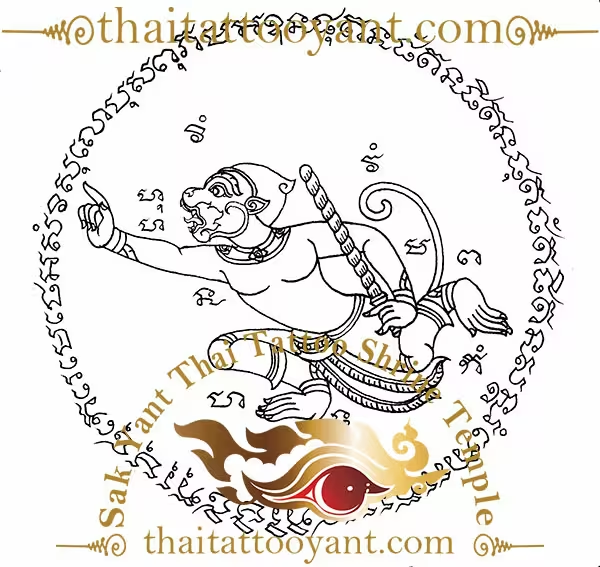
Leaping Hanuman
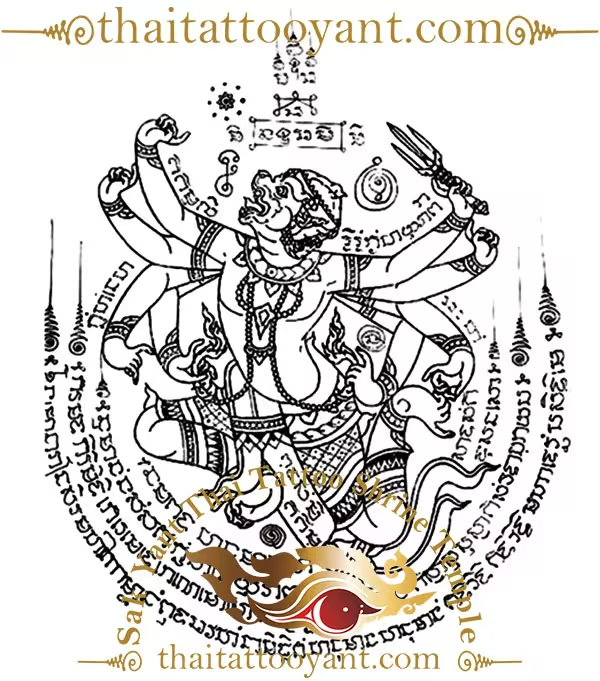
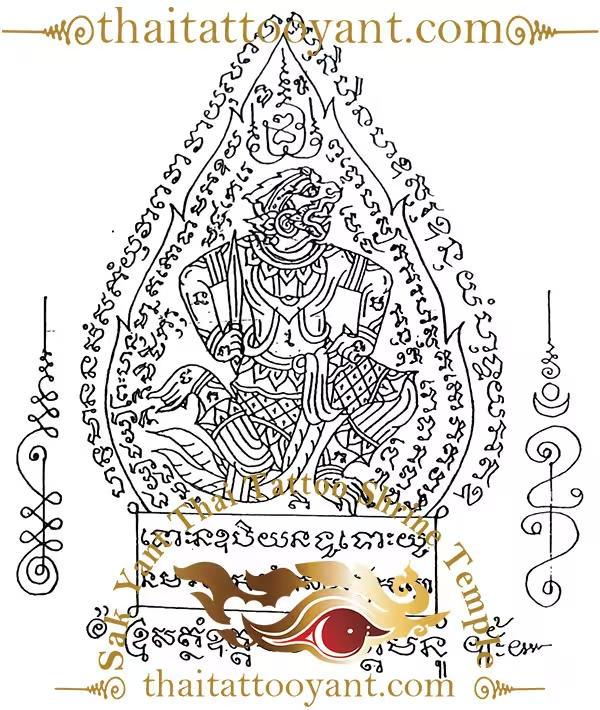
This is a classic and highly revered Sak Yant design featuring Hanuman (ยันต์หนุมาน), presented in a distinctive teardrop/flame-shaped border with extensive (ancient Thai Kata) script.
Design Breakdown
Central Figure: Hanuman, the divine monkey warrior from the Ramakien, depicted in a powerful, grounded pose. He is armored, wearing traditional warrior regalia, and appears ready for action or in a commanding stance.
Border: A pointed, flame-like or teardrop oval enclosure filled with dense sacred Khom script (mantras/kata). This shape is common in Sak Yant for focusing and containing spiritual energy.
Bottom Section: A rectangular panel with additional Khom text, likely containing the specific kata (incantation) or name of this yant, which activates its power.
Flanking Elements: Decorative spirals and script on the sides, enhancing symmetry and protection.
This variation is often called Hanuman in Teardrop / Flame Yant or a form of Hanuman Tua Kao (9th incarnation Hanuman), depending on the exact Ajarn lineage.
Hanuman Thawai Sak Yant
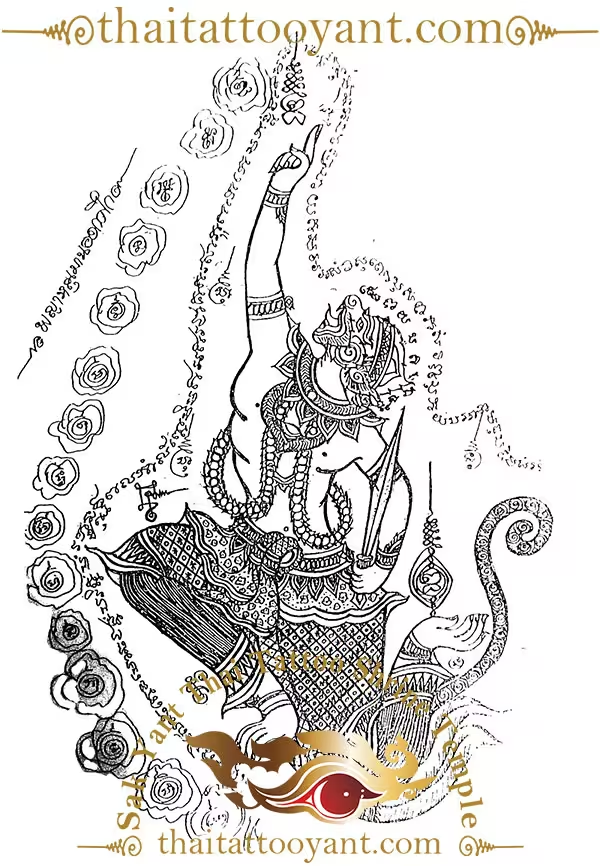
This is Yant Hanuman with raised hand pointing upward (often called Hanuman Thawai or a variant of Hanuman Maha Amnaj / Invoking Power in Sak Yant tradition).
Symbolism
Hanuman in dynamic pose: The monkey god is shown in a leaping motion, with one arm dramatically raised and index finger pointing upward.
Meaning of the pointing gesture:
Invoking divine power: The upward point is a classic mudra-like gesture for calling upon higher forces, the heavens, or the Buddha’s blessings. It symbolizes connection to cosmic/spiritual energy, authority, and command.
Commanding respect/authority (Maha Amnaj): Hanuman asserting dominance, issuing a decree, or dispelling negativity with divine force.
This variation emphasizes spiritual invocation + warrior power rather than purely devotional offering (garland/flowers). The raised arm channels Hanuman’s legendary strength and loyalty into focused intention and divine alignment.
Social Media Links
Bangkok Ink Tattoo Group Associates in Business
Sak Yant Tattoo Designs
Sak Yant Designs
Thai Tattoo Designs
Thai Tattoo Yant Designs
Tiger Web Geek, Website Design, Hosting, SEO, Marketing
Thai Tattoo Sak Yant UK Tours
Bangkok Ink Studio, Machine, Hand Poke Tattoos, Tattoo Removal, VIP Service to Ajarn Ohr
Tattoo School Thailand Bangkok
Asian Artifacts oneshopasia.com
Thai Tattoo Sak Yant USA
...
Skindiver Tattoo Studio, Gothenburg, Sweden
inktattoo.se Tattoo Studio
Skin Graffiti Tattoo Studio UK
Happysailortattoo.com Old School Tattooing
Ink Tattoo Studio
jourservice
The Tattooed Gent Studio