
Hanuman Thai Tattoo
Hanuman Tua Head Yant and Flying Designs
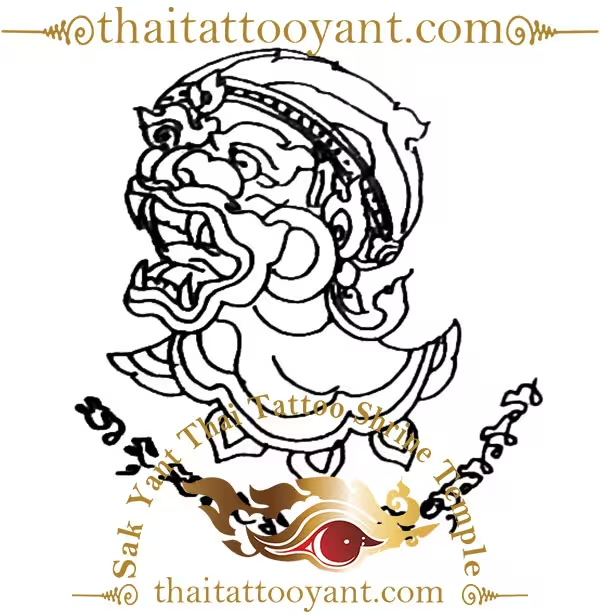
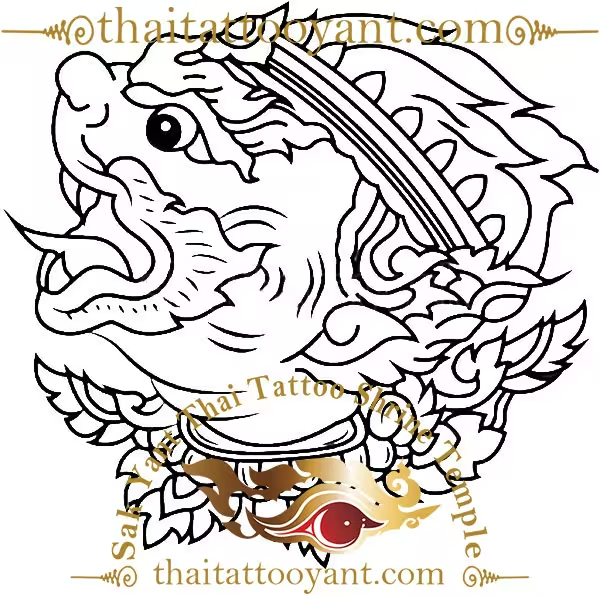
The image shows a powerful, stylized head with:
A fierce, roaring expression with an open mouth, sharp fangs, and protruding tongue — conveying raw power and a battle-ready roar.
A flowing, flame-like or ornate mane/crown with decorative bands (often representing a divine headdress or warrior regalia).
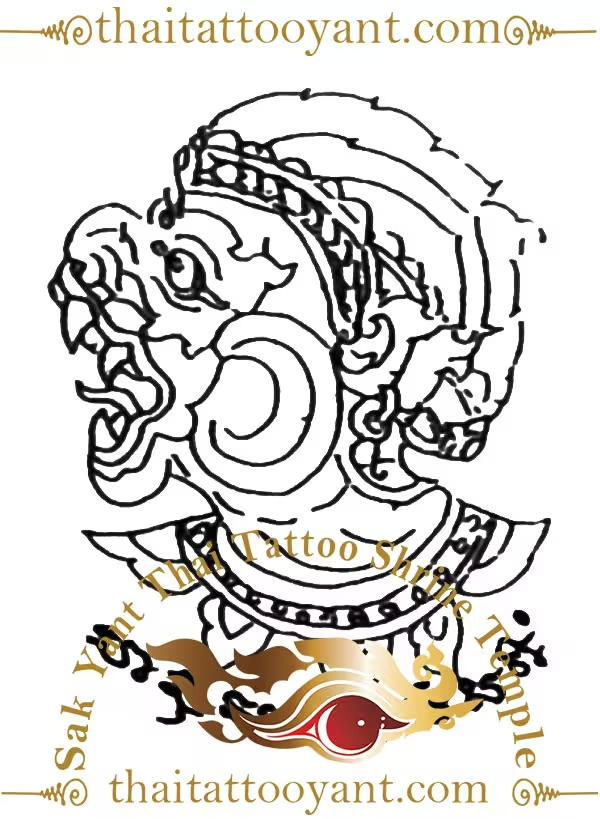
Expressive eyes that stare directly forward with intensity.
Ornate collar/neck details with lotus or petal motifs at the base — symbolizing purity and spiritual elevation.
Wing-like or flame flourishes around the sides — adding a supernatural, dynamic energy.
This is a classic iconic representation of Hanuman’s head (not a full-body monkey or lion). In Thai art, Hanuman (the white monkey god) is frequently depicted with these exaggerated, fierce, almost leonine features to emphasize his divine warrior nature, even though he is fundamentally a monkey deity from the Ramakien (Thailand’s version of the Ramayana epic).
Core Meaning and Symbolism
Hanuman is the ultimate devoted warrior and protector. His head design distills his essence into a potent emblem of:
Unstoppable strength and courage — Hanuman possesses immense physical and mental power. He can fly, change size, and overcome impossible obstacles (like leaping across the ocean to rescue Princess Sita). The roaring head represents fearlessness in battle and the ability to face any adversity.
Loyalty and devotion — As the faithful general of Phra Ram (Rama), he symbolizes unwavering commitment to duty, family, friends, or a higher purpose. The design reminds the wearer to stay dedicated and humble while fighting for what is right.
Victory over enemies and obstacles (Chana Satru) — Hanuman leads the monkey army to defeat demons and evil. This head is believed to grant success, triumph over rivals, and the power to clear hindrances in life, work, or competition.
Protection and invulnerability — Just as Hanuman shields Rama, the design acts as spiritual armor. It wards off danger, harm, accidents, black magic, and negative forces. Many believe it brings resilience — even if “defeated,” Hanuman’s wind-born nature allows him to rise again.
Invincibility (Kong Grapan Chadtri): It is believed to protect the wearer from physical harm, weapons, and accidents.
Self-Confidence and Bravery: Hanuman represents the ultimate warrior spirit, granting the wearer courage and the mental strength to face any challenge.
Power and Influence: It helps individuals gain authority and the respect of their peers or subordinates.
Agility and Success: Just as Hanuman could leap across oceans, this Yant is thought to help the wearer navigate obstacles quickly and achieve their goals.
Leadership, charisma, and authority (Maha Amnaj) — The intense gaze and regal features project a commanding presence. Wearers often gain influence, respect, and the ability to lead or inspire others.
Intelligence, agility, and endurance — Hanuman is clever and tireless. The design encourages quick thinking, adaptability, and persistent energy.
In Sak Yant tradition, a Hanuman head (sometimes called a “Hanuman tua” or head-focused variant) is especially popular because it concentrates his power in a compact, impactful form. It is chosen by:
Muay Thai fighters, soldiers, police, or athletes for strength and victory.
Anyone needing courage in challenging times, protection during travel/risk, or a boost in confidence and influence.
Head Yant Hanuman Nueng
This design features Yant Hanuman Nueng (or Yant Hua Hanuman), depicting the head of the monkey deity Hanuman, a central figure in the Ramakien.
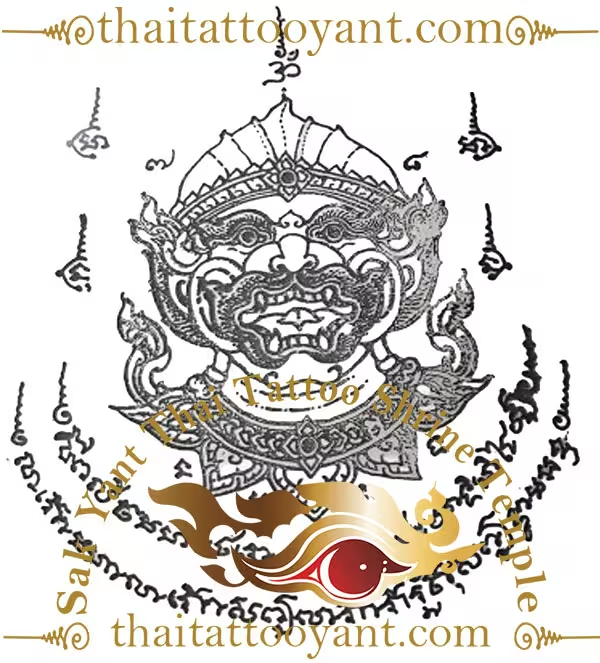
Symbolism: Hanuman is the immortal commander of the monkey army, known for his incredible strength, agility, and unwavering loyalty to Rama.
Composition: The design focuses on the head of Hanuman wearing a decorative crown. He is surrounded by sacred Thai Khom script and Unalome spirals, which represent the spiritual path toward enlightenment.
Flying Hanuman Sak Yants
Hanuman and Son Macchanu
This image depicts the famous battle scene between Hanuman and his son Macchanu (หนุมานปะทะมัจฉานุ) from the Ramakien.
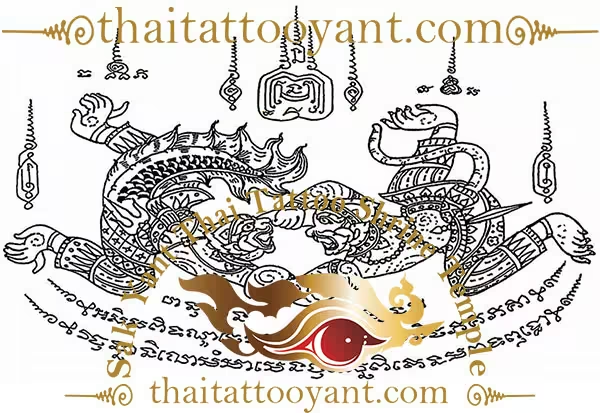
Two monkey warriors locked in intense hand-to-hand combat/grappling.
Left figure (with the long, scaled/dragon-like tail): This is Macchanu in his hybrid merman form — upper body of a monkey warrior, lower body with fish/serpent tail.
Right figure: Hanuman, the father, in full monkey warrior armor.
Both are shown in dynamic, powerful fighting poses, wrestling fiercely.
Surrounded by traditional Thai Kata Khom sacred script and auspicious motifs.
Story Context
In the Ramakien (Thai Ramayana), during the battle in the underwater realm of Maiyarap (เมืองบาดาล):
Macchanu guards a key entrance (often a lotus pond).
Hanuman, pursuing the kidnapped Phra Ram, encounters him.
They fight fiercely without recognizing each other — Macchanu is a worthy opponent even for his father.
Eventually, they realize their father-son relationship through conversation and divine signs, reconcile, and Macchanu joins Hanuman’s side.
This moment symbolizes unexpected kinship, reconciliation, loyalty, and the power of blood ties.
Meaning in Art / Sak Yant
This dual-figure design is a powerful protective yantra. It represents:
Strength, courage, and resilience — Combining the powers of both father and son.
Victory through adaptability — Macchanu’s hybrid (monkey + aquatic) abilities + Hanuman’s divine strength.
Protection and harmony — Overcoming conflict, family bonds, and safeguarding against danger.
In tattoos or amulets, it grants invincibility, bravery in challenges, adaptability, and spiritual protection.
Figure: Hanuman Flying through the Air
The central image shows, a common pose in Thai sacred art.
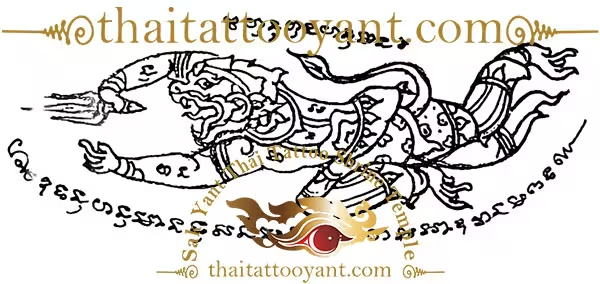
Hanuman is a divine monkey general, known for:
Superhuman strength
Fearlessness in battle
Loyalty, protection, and invincibility
He is widely revered in Thailand, not only as a mythological hero but also as a spiritual protector.
The Next one Flying through the air
The Writing Around the Image
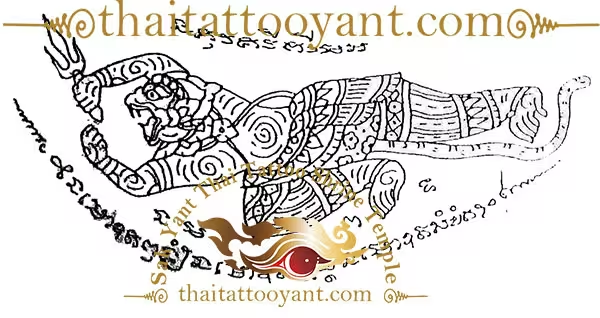
The characters are written in Thai Kata Khom script.
This script is traditionally used for Buddhist and Brahmanic sacred texts, especially in Sak Yant (magic tattoos) and protective talismans.
The text usually consists of:
Protective spells
Invocations for power, safety, charm, or success
They are not meant to be read like normal sentences; instead, they are ritual formulas activated through chanting and blessing by an Ajarn Master.
Meaning & Purpose
This type of image is typically used as a protective yantra. Its meanings usually include:
Protection from danger and enemies
Bravery and martial power
Magical invulnerability
Quick thinking and cleverness
Spiritual authority and charisma
When used as a tattoo, talisman, or manuscript drawing, it is believed to work only after being ritually empowered.
Flying Sak Yant Hanuman
This is “Flying Hanuman” (หนุมานบิน) or “Leaping/Flying Hanuman with Bow” (หนุมานยิงธนูบิน), a dynamic variation in Thai Sak Yant and Ramakien art.
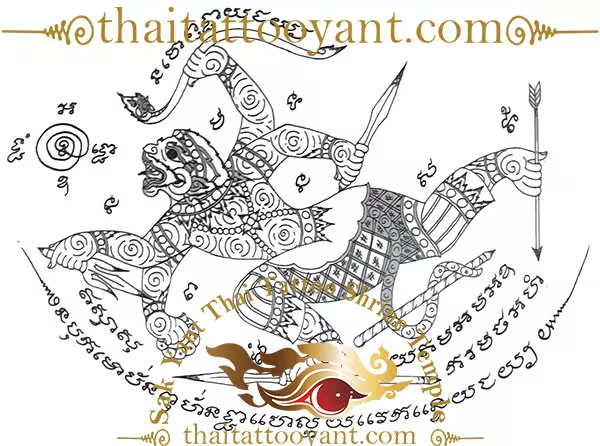
Key Features
Pose: Hanuman captured mid-air in a powerful flying/leaping stance, conveying speed, agility, and momentum.
Weapons:
Holding a bow (drawn or ready).
Spear in the other hand.
Additional weapons shown around the figure for full combat readiness.
Appearance: Fierce monkey warrior with ornate Thai armor, headdress, and flowing tail.
Surroundings: Encirled by protective Thai Kata Khom sacred script.
Flying Hanuman Sak Yant
This is “Flying Hanuman” (หนุมานบิน) in a powerful multi-weapon battle variation, a highly detailed and potent design in Thai Sak Yant and Ramakien art.
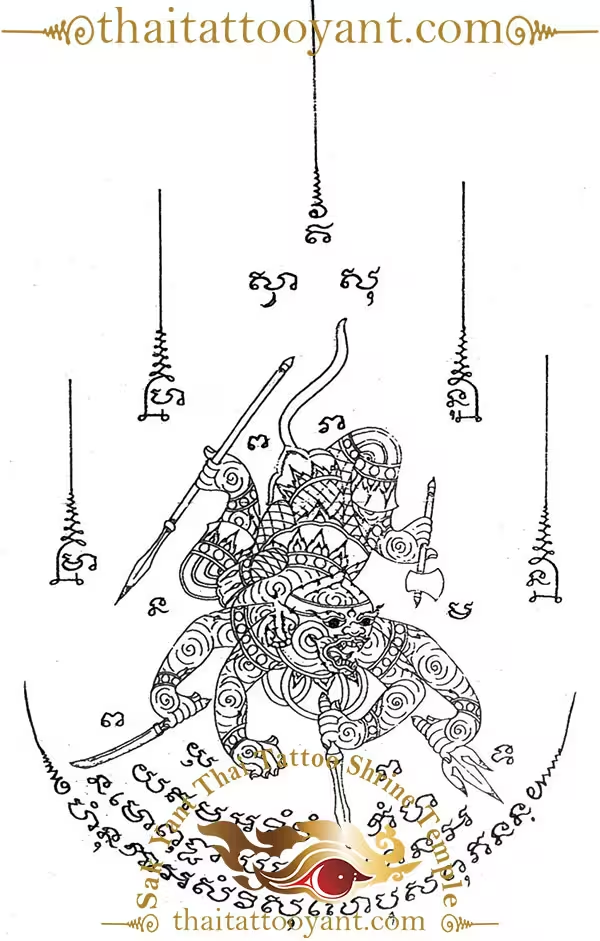
Key Features
Pose: Dynamic flying/leaping stance, capturing Hanuman mid-air with great speed and power.
Weapons (multi-armed combat style):
Long spear (or lance) raised in one hand.
Axe in another hand.
Sword held downward or at the side.
Additional blades/weapons integrated into the composition.
Appearance: Ornate Thai armor, tall headdress, fierce monkey warrior face, and flowing tail.
Surroundings: Encirled by extensive Thai Kata Khom sacred script at the bottom and decorative hanging motifs above.
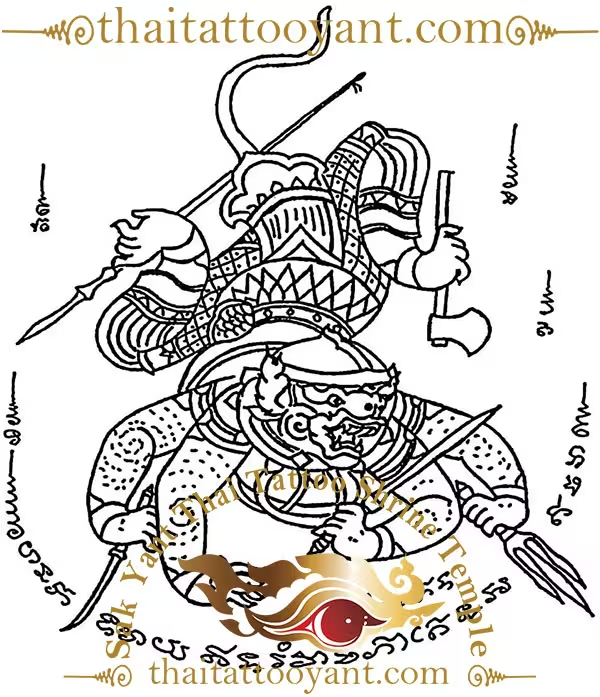
This “Flying Hanuman” design channels Hanuman’s legendary divine powers from the Ramakien — especially his ability to fly across oceans, leap mountains, and dominate battlefields. It symbolizes:
Unstoppable speed and momentum — The ability to overcome any distance, obstacle, or challenge quickly.
Complete combat mastery — Multiple weapons (spear for reach, axe for power, sword for close combat) represent versatility, readiness for any situation, and total dominance in battle.
Invincibility and divine strength — Grants the wearer extreme courage, physical/mental power, protection from all directions, and victory over enemies or difficulties.
Loyalty and heroic spirit — Embodies Hanuman’s unwavering devotion to Sak Yant tradition, this multi-weapon flying version is considered very powerful.
Sak Yant Flying Hanuman
This is a highly detailed and elaborate “Flying Hanuman” (หนุมานบิน) or “Multi-Armed Hanuman Yantra”, a more mystical and complex variation popular in advanced Sak Yant tattoos and protective amulets.
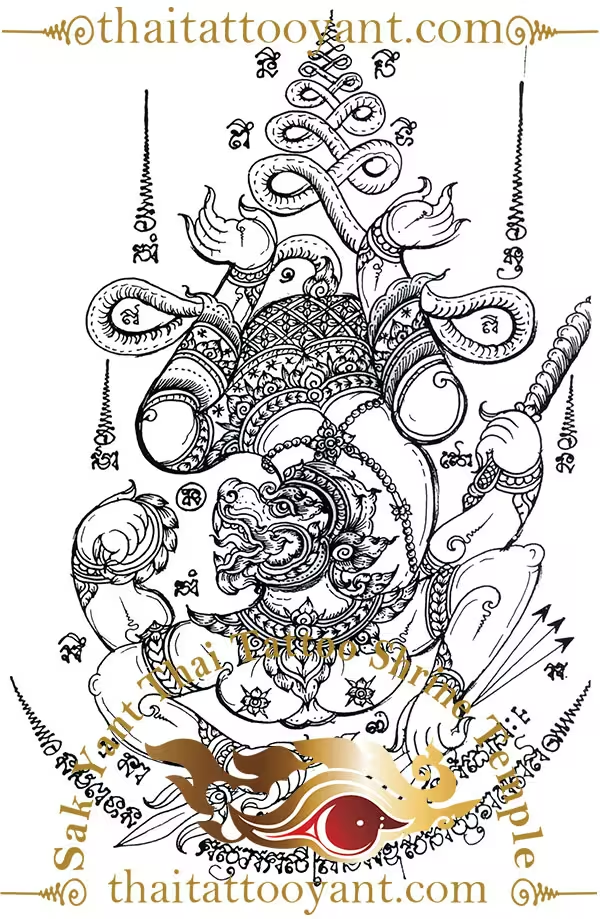
Key Features
Pose: Dynamic, energetic stance with a sense of movement (perceived as flying or leaping).
Multi-armed form: Shows Hanuman with several arms, holding arrows, a bow, and other weapons — representing complete mastery over multiple directions and forms of combat.
Distinctive elements:
Fierce monkey face with ornate headdress.
Heavy use of coiled Monkey tail rising above and around the figure (symbolizing enhanced mystical power).
Detailed Thai style armor, jewelry, and floral patterns.
Surroundings: Fully encircled by extensive Thai Kata Khom sacred script at the bottom and decorative protective symbols.
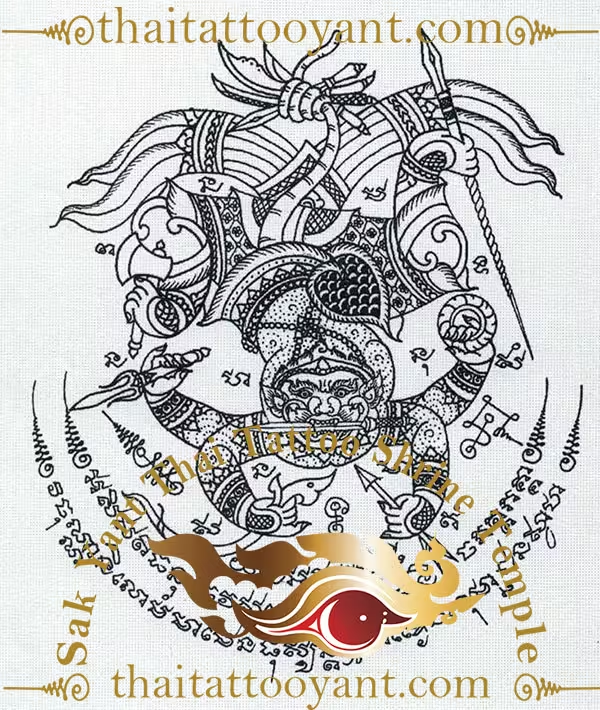
Meaning and Symbolism
These versions combines Hanuman’s core legendary powers with deeper esoteric elements:
Flight, speed & agility — Captures Hanuman’s divine ability to fly across oceans and leap great distances in the Ramakien.
Multi-directional power — The multiple arms and weapons (especially arrows) symbolize the ability to strike in all directions, achieve goals from afar, and handle any challenge with versatility.
Mystical enhancement — The prominent Monkey Tail coils add layers of protection, control over hidden forces, and balance between fire (Hanuman’s energy) and water/earth energies.
Invincibility & supreme protection — This is considered one of the stronger Hanuman designs, granting:
Fearlessness and courage
Overwhelming victory in battles or obstacles
Comprehensive spiritual and physical safeguarding
Leadership, resilience, and success
In Sak Yant tradition, such elaborate multi-armed flying Hanuman yantras are highly revered for people seeking maximum power, all-around protection, and the ability to overcome major life challenges quickly.
Double Flying Hanuman Sak Yant
This is a complex and powerful Sak Yant design known as “Double Flying Hanuman” or “Hanuman Guarding the Sacred Temple / Magical Square” (ยันต์หนุมานคู่ปกป้องปราสาท or similar variations).
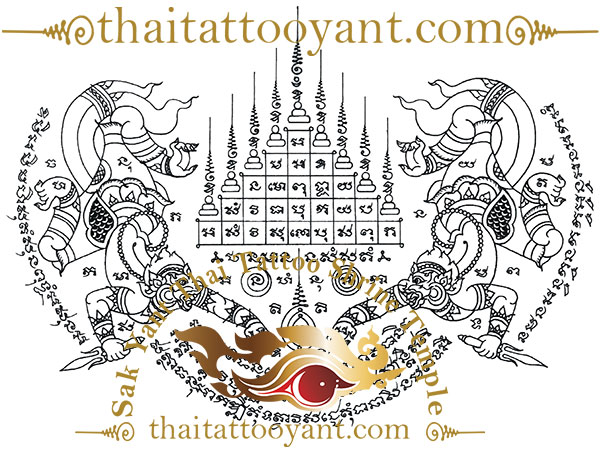
Key Features
Two Hanuman figures: One on the left and one on the right, both in dynamic flying/leaping battle poses with weapons (swords/daggers visible). They are symmetrically placed as guardians.
Central element: A detailed temple structure (Prasat) with multiple spires, combined with a magical grid / sacred square filled with Thai Kata Khom numerals and symbols — this is a powerful yantra core for concentration of energy.
Surroundings: Extensive Thai Kata Khom sacred script encircling the entire design, creating a strong protective border.
Meaning and Symbolism
This is one of the more elaborate Hanuman yantras. It represents:
Ultimate protection and guardianship — The two flying Hanumans act as fierce defenders of the sacred center (the temple/grid symbolizes dharma, holiness, or the wearer’s life/energy).
Invincibility and divine power — Hanuman’s flying/leaping ability + dual presence means protection from all directions (front, back, left, right).
Victory over obstacles — The dynamic poses show Hanuman ready to overcome any enemy, evil spirit, or difficulty.
Stability and blessing — The central temple/grid represents long-term safeguarding of fortune, health, authority, and spiritual strength.
In Sak Yant tradition, this type of double Hanuman design is considered extremely potent. It is often used for:
Strong all-around protection (especially against black magic, accidents, or enemies)
Leadership and authority
Success in competitive or dangerous fields
Safeguarding one’s home, business, or important endeavors
It is more comprehensive than the single-figure flying Hanuman designs — the dual Hanumans + central yantra make it a complete protective system.
Add Your Heading Text Here
Sak Yant Flying Hanuman with Sword
This is another dynamic “Flying Hanuman” (หนุมานบิน) Sak Yant design, specifically a variation showing Hanuman in mid-flight with a sword.
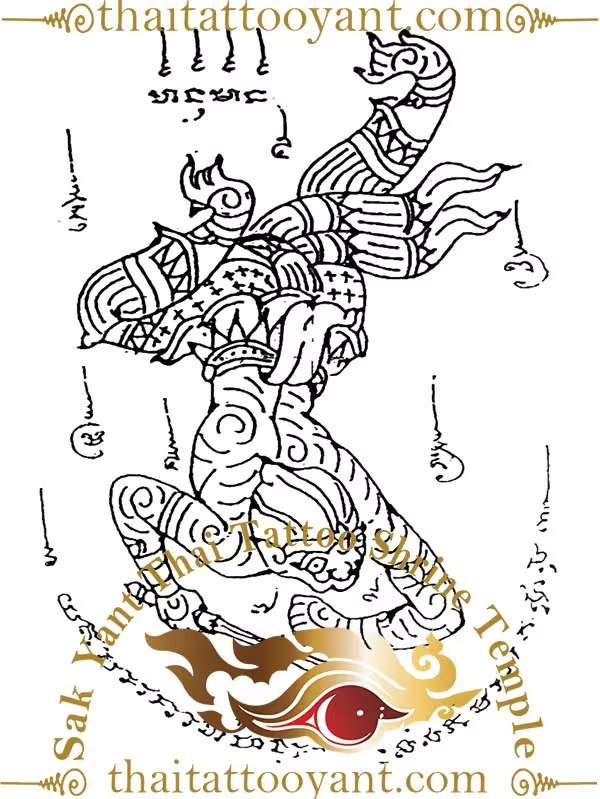
Key Features
Pose: Strong flying/leaping stance, body angled dynamically as if soaring through the air.
Weapon: Holding a sword (ดาบ) ready for combat.
Appearance: Classic monkey warrior with fierce expression, ornate Thai armor, detailed headdress, and flowing sashes/ribbons that enhance the sense of motion.
Meaning and Symbolism
This design captures Hanuman’s legendary ability to fly vast distances in the Ramakien (such as leaping across the ocean to Lanka or carrying mountains). It symbolizes:
Speed, agility, and unstoppable momentum — The ability to quickly overcome obstacles, travel through challenges, or act decisively.
Courage and combat readiness — The sword represents cutting through enemies, negativity, and difficulties with power and precision.
Divine protection and invincibility — In Sak Yant tradition, Flying Hanuman yantras grant the wearer fearlessness, physical/mental strength, resilience, and strong spiritual safeguarding during journeys, battles, or major life transitions.
Loyalty and heroic energy — Channels Hanuman’s unwavering devotion to Phra Ram combined with superhuman power.
Sak Yant Flying Hanuman in Kata Thai Script Frame with Raised Arms
This is Hanuman in a dynamic “Raised Arms / Invoking” or “Victory Pose” (often categorized under Flying Hanuman or Dancing Hanuman yantras in Sak Yant).
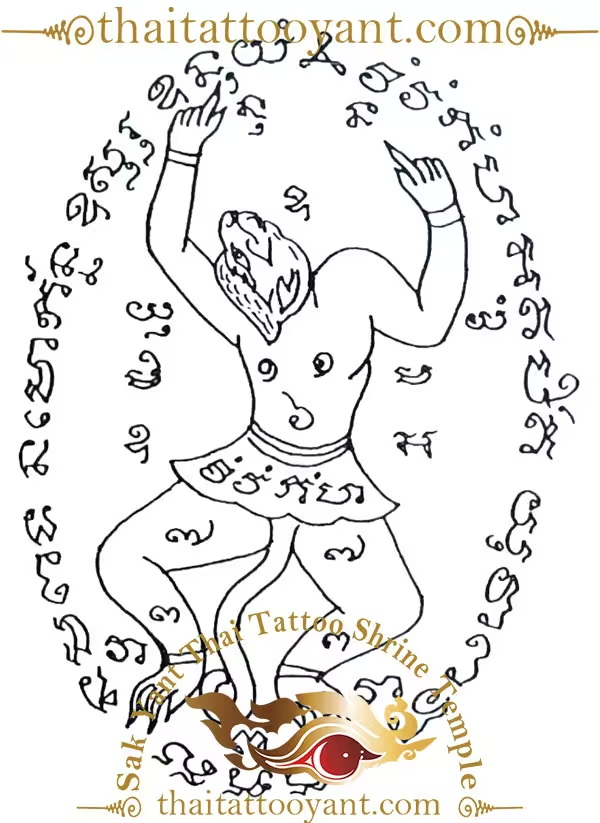
Key Features
Pose: Energetic standing stance with both arms raised high. One hand points upward (invoking power from the heavens), the other hand also extended with pointed fingers — conveying command, calling upon strength, or celebrating victory.
Appearance: Classic monkey warrior with fierce face, long tail, traditional Thai-style skirt/attire, and bare upper body.
Frame: Enclosed in a clean oval border filled with Thai Kata Khom sacred script, typical of protective Sak Yant designs.
Meaning and Symbolism
Although though it is referred to as Flying Hanuman, this variation emphasizes divine invocation and triumphant energy rather than mid-air flight. It symbolizes:
Calling down heavenly power — The raised arms and pointing fingers represent Hanuman connecting with divine energy, drawing strength from the sky/wind god (his father, Phra Phai).
Victory and dominance — This pose shows Hanuman asserting power, overcoming obstacles, and claiming triumph after battle (similar to his celebratory moments in the Ramakien).
Protection and authority — Grants the wearer courage, leadership, fearlessness, and the ability to command respect or repel evil.
Spiritual activation — In Sak Yant tradition, this type of raised-arm Hanuman is believed to activate inner power, enhance charisma, and provide strong safeguarding.
Sak Yant Hanuman style designs
These are two Sak Yant-style designs (sacred Thai tattoos or ritual drawings) of Hanuman (หนุมาน), the divine white monkey god from the Thai Ramakien (Thailand’s version of the Indian Ramayana epic).
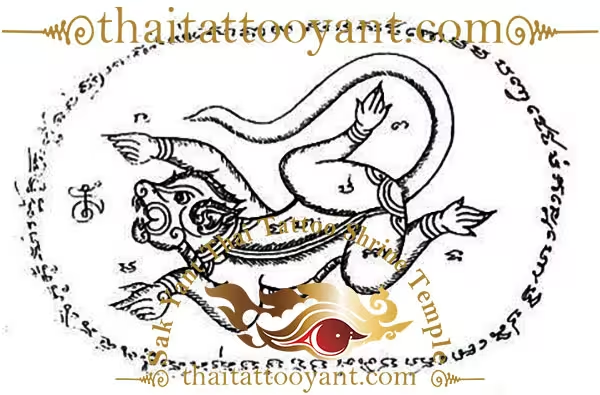
What Hanuman is doing
Both images show Hanuman in dynamic, flying or leaping postures inside oval frames surrounded by Thai Kata script (yantra or kata mantras).
First image: Hanuman is depicted mid-leap or flying forward, body arched, one arm extended, tail flowing, legs in a powerful kicking or propelling motion. He appears alert and ready for action, almost as if bounding through the air or charging into battle.
Next image: A slightly different variation — Hanuman is in a more aggressive flying/leaping attack pose, body stretched out, one arm pointing or striking forward, legs extended behind, conveying greater speed and momentum.
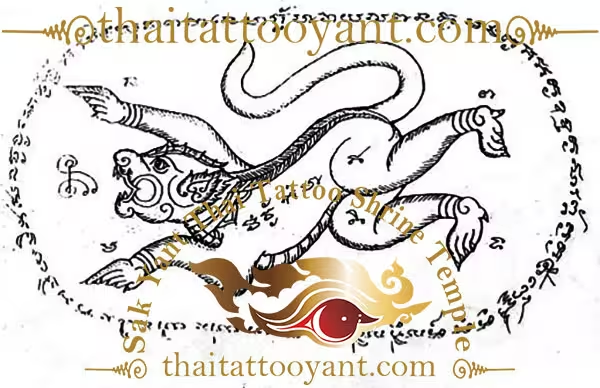
These are not static portraits. The poses emphasize movement, agility, and flight — one of Hanuman’s signature supernatural powers. In mythology, he can fly vast distances, change size, and leap across oceans or battlefields instantly.
Why these poses? (Meaning and symbolism)
Hanuman represents the ultimate devoted warrior: loyal, brave, humble, intelligent, and nearly invincible. In the epic, he leads the monkey army to rescue Princess Sita, battles demons, and performs impossible feats for his lord (Phra Ram/Rama).
The flying/leaping postures specifically symbolize:
Swift action and overcoming obstacles — Hanuman’s famous leap across the ocean to Lanka (to find Sita) is a core legend. These designs capture that moment of heroic, unstoppable movement.
Agility, speed, and adaptability — He moves through the air like the wind (he is the son of the wind god in some versions). The pose reminds the bearer to act quickly, think on their feet, and navigate challenges with cleverness.
Fearless courage and victory in battle — The dynamic leap suggests charging forward without hesitation, defeating enemies, and achieving success. It’s popular among Muay Thai fighters and soldiers for this reason.
Protection and spiritual power — The surrounding mantras (the Thai/Khmer script) are sacred incantations that “activate” the yant. Together with the image, they are believed to grant the wearer:
Invincibility or strong protection from danger and harm
Strength, endurance, and bravery
Loyalty/devotion (to family, duty, or goals)
Success, charisma, and the ability to influence or overcome rivals
Fearlessness in adversity
Social Media Links
Bangkok Ink Tattoo Group Associates in Business
Sak Yant Tattoo Designs
Sak Yant Designs
Thai Tattoo Designs
Thai Tattoo Yant Designs
Tiger Web Geek, Website Design, Hosting, SEO, Marketing
Thai Tattoo Sak Yant UK Tours
Bangkok Ink Studio, Machine, Hand Poke Tattoos, Tattoo Removal, VIP Service to Ajarn Ohr
Tattoo School Thailand Bangkok
Asian Artifacts oneshopasia.com
Thai Tattoo Sak Yant USA
...
Skindiver Tattoo Studio, Gothenburg, Sweden
inktattoo.se Tattoo Studio
Skin Graffiti Tattoo Studio UK
Happysailortattoo.com Old School Tattooing
Ink Tattoo Studio
jourservice
The Tattooed Gent Studio